How long aluminum deck railing lasts compared to wood, vinyl, and composite — plus what affects lifespan and how to maintain it.
This article is part of our complete Aluminum Deck Railing guide.
We've been shipping aluminum railing from our plant in Aldergrove, BC since 2004. Some of our earliest installations are still standing. Same posts, same rails, same powder coat finish. No repainting, no replacement parts, no structural repairs. Twenty years in and they look like they went up last season.
That's not a sales pitch. It's what happens when you build a railing from aluminum instead of wood, coat it with AAMA 2604 powder on a 5-stage pretreated surface, and bolt it to a properly framed deck. The material doesn't have a failure mode under normal outdoor conditions. It doesn't rot, rust, warp, crack, swell, shrink, or attract insects. It just sits there and does its job.
But "aluminum railing lasts a long time" isn't the whole story. The type of system, the quality of the coating, the installation, and the environment all affect how many years you get, and how good it looks getting there. Here's what to actually expect.
How long do different aluminum railing systems last?
Not all aluminum railing is identical. The aluminum structure itself is effectively permanent in every configuration, but the non-aluminum components (gaskets, seals, glass) have their own lifespans. Here's how each of our three system types performs over time.
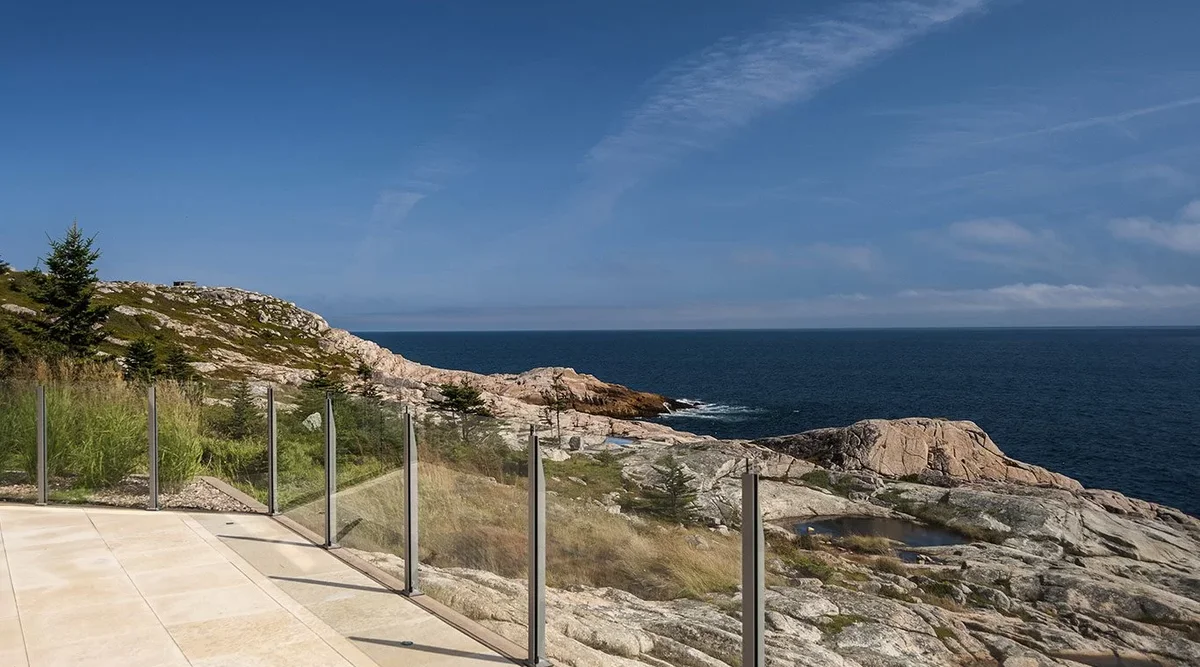
Infinity Topless (frameless glass) lasts 30+ years at the post level. The tempered glass panels are virtually permanent because glass doesn't degrade from weather exposure. The component with the shortest lifespan is the rubber gaskets and seals that hold the glass in the post channels. Depending on UV exposure and climate, these may need replacement after 15 to 20 years. That's a maintenance item, not a system replacement. The posts, the glass, and the mounting hardware all stay in place. This is the system we installed on a coastal property in Gill Cove, Nova Scotia, where salt air is constant and the railing is fully exposed to Atlantic weather. It's the most demanding environment we ship to, and the system holds up.
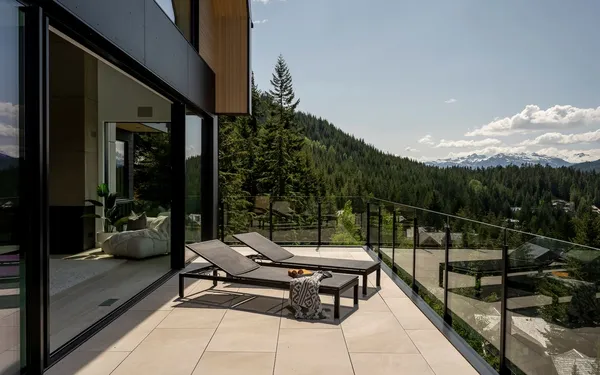
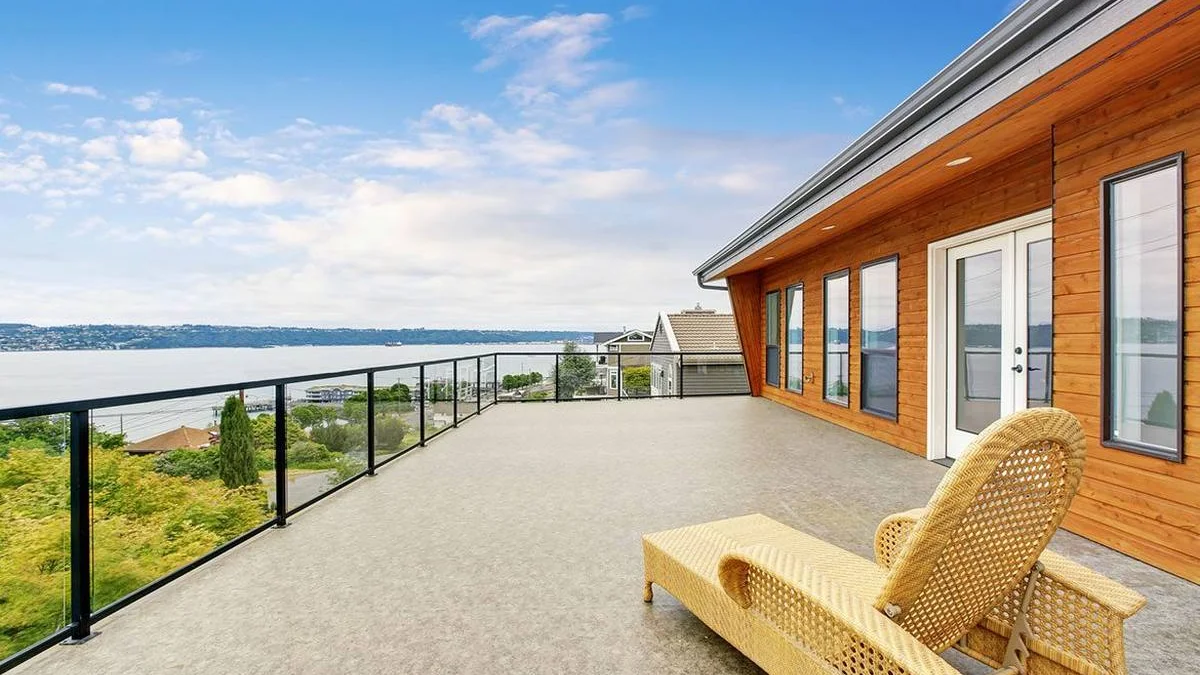
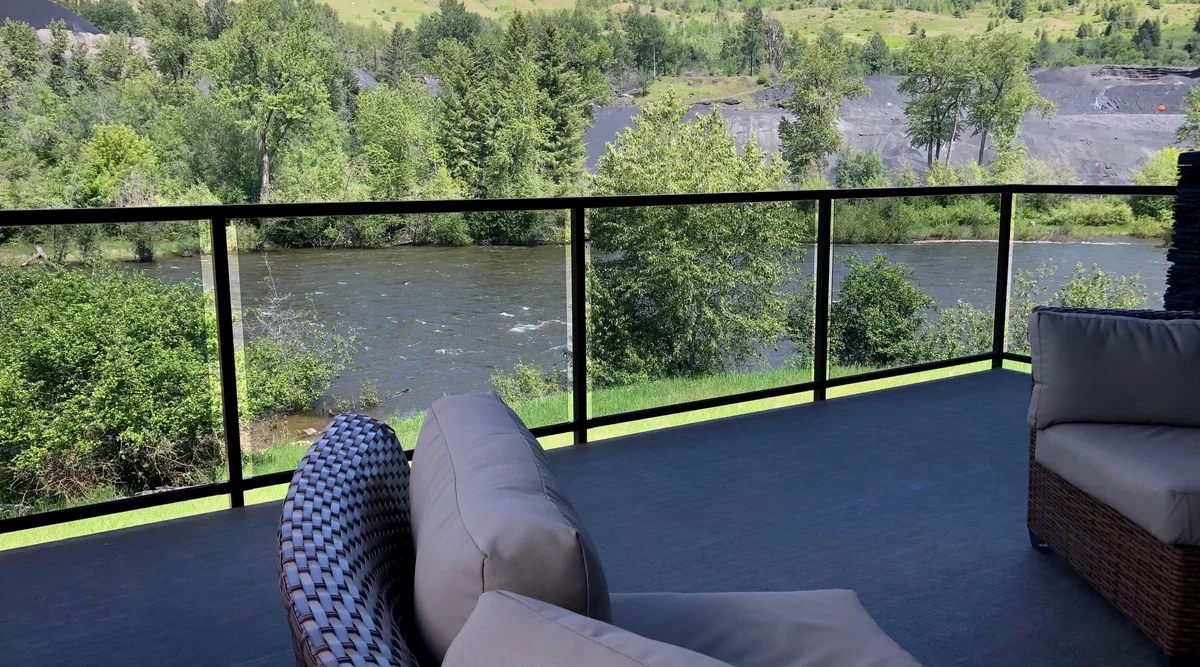
Glass component railing has the same 30+ year aluminum frame, the same permanent glass panels, plus a top rail that adds structural rigidity and a finished look. The rubber gaskets sit in a more protected channel compared to the topless system, so they're slightly more shielded from UV. Expect the same 15 to 20 year gasket life, possibly longer. The aluminum and glass themselves will outlast the house. We see these systems on elevated decks across BC's Sunshine Coast, the Gulf Islands, and throughout the Pacific Northwest, in environments with heavy rain, coastal moisture, and temperature swings. The powder coat finish on a properly pretreated system doesn't care.
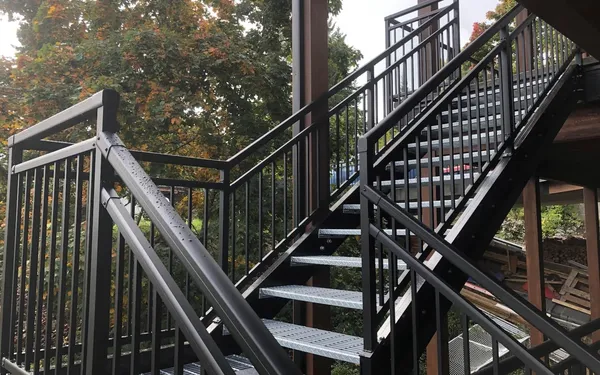
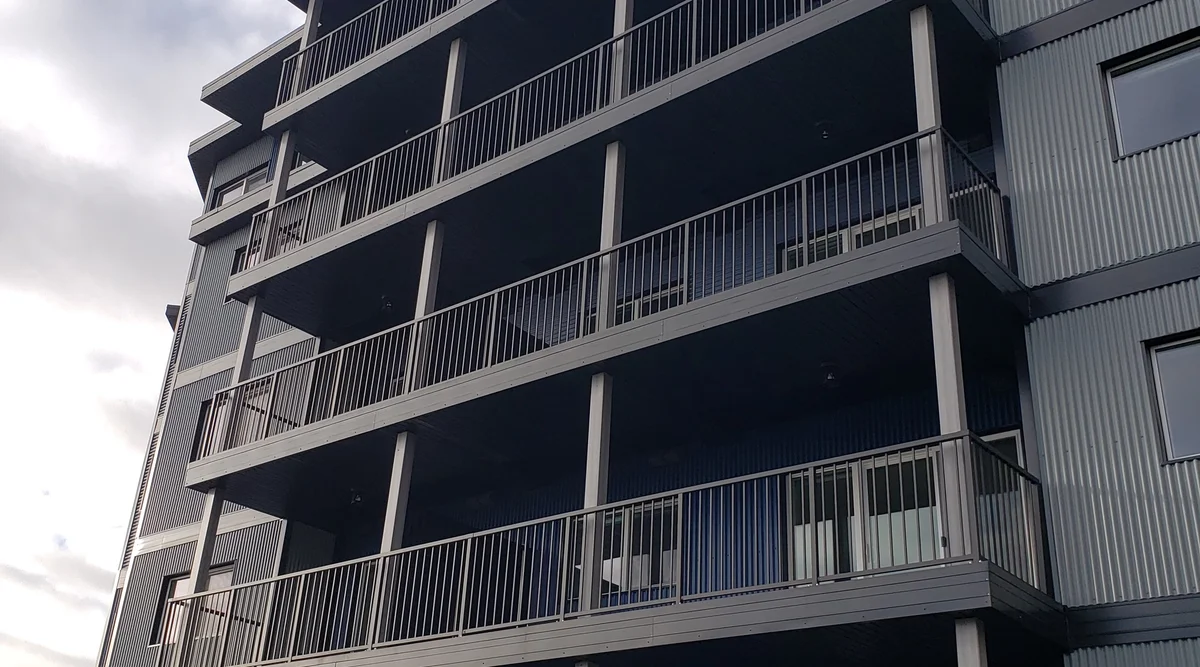
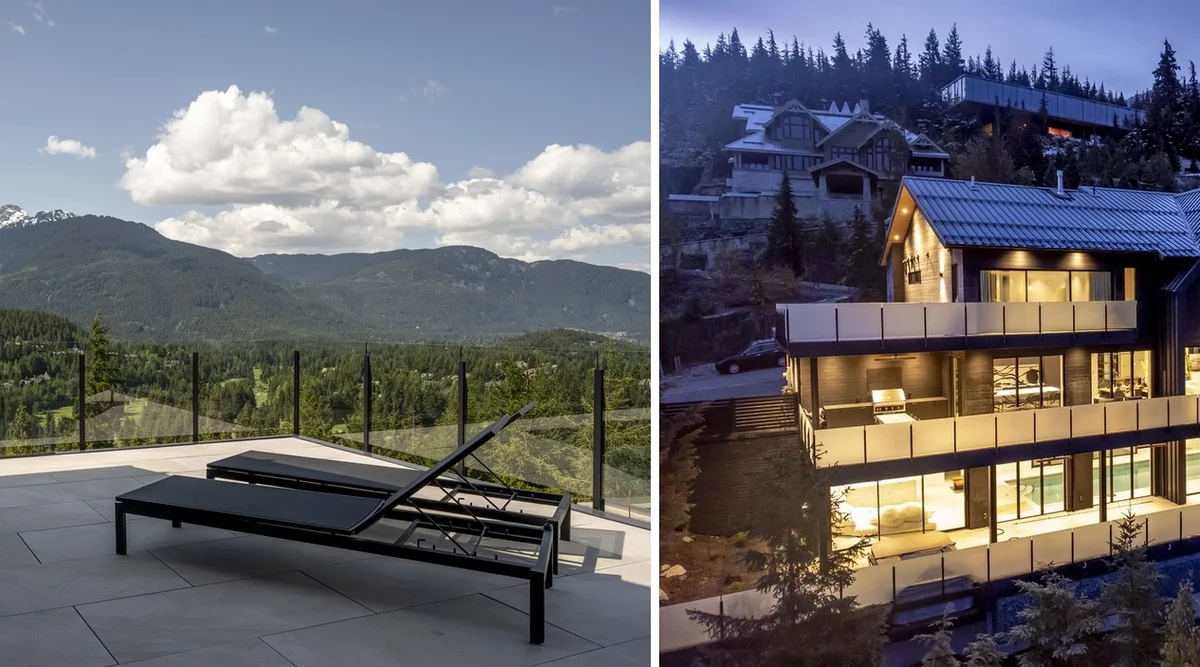
Picket railing is the simplest system and arguably the most durable, because there's nothing to replace. No gaskets, no seals, no glass panels. It's all aluminum, all powder coated, all welded at the factory. The only moving part is zero moving parts. For families, rental properties, multi-family buildings, and anyone who wants to install railing and genuinely never think about it again, picket is the answer. We've shipped picket systems to dealers from Whistler to New Jersey, and the maintenance conversation is always the same: .wash it with soap and water a couple times a year. That's it. The multi-family project in Gibsons, BC was installed by Sun Pro Enterprises, and the Whistler installation was done by Whistler Glass. Both are long-standing dealers who chose our systems specifically because they don't generate callback maintenance work.
How aluminum compares to every other railing material
Here's the honest comparison. We manufacture aluminum, so we're biased, but the numbers are the numbers.
| Material | Structural lifespan | Finish lifespan | Maintenance |
|---|---|---|---|
| Aluminum (powder coated) | 30+ years | 20+ years (AAMA 2604) | Soap and water 2–4x/year |
| Pressure-treated wood | 10-15 years | 2-3 years between coats | Stain or paint every 2-3 years |
| Cedar | 15–20 years | 1–2 years between sealing | Seal every 1–2 years |
| Vinyl / PVC | 20–25 years | Colour is through-body | Low, but brittle in cold |
| Composite | 25–30 years | 10–15 years before fading | Low, but can stain and mould |
| Wrought iron / steel | 20–30 years | 3–5 years before rust | Scrape and repaint regularly |
| Stainless steel cable | 10–15 years | Cables sag over time | Re-tension cables every 1-2 years |
The key takeaway from this table isn't just lifespan. It's the maintenance column. Every material except aluminum and vinyl requires regular, hands-on maintenance to reach its expected lifespan. Wood needs staining or painting every 2-3 years. Steel needs scraping and repainting. Cedar needs sealing annually. Skip the maintenance and the lifespan drops dramatically. Aluminum doesn't have that condition. The 30+ year number is what you get with soap and water twice a year.
For a more detailed material comparison: Aluminum vs. Steel, Wood or Vinyl
Does aluminum railing rust?
No. And this is a question we hear constantly, so it's worth explaining clearly: aluminum does not rust. Rust is an iron oxide reaction. It only affects iron and steel. Aluminum is a completely different metal with different chemistry.
When exposed to air, aluminum naturally forms a thin oxide layer on its surface that actually protects it from further corrosion. It's self-healing. If you scratch through the oxide layer, it reforms almost immediately. This is why bare, uncoated aluminum doesn't corrode the way bare steel does.
When you add powder coating on top of that natural oxide layer, you have double protection. The oxide layer prevents corrosion at the metal surface. The powder coat prevents UV damage, chalking, and cosmetic wear. That combination is why aluminum railing performs so well in coastal environments, humid climates, and areas with heavy rain, snow, and road salt. We ship systems to dealers on the BC coast, across the Pacific Northwest, into the Atlantic provinces, and throughout the northern US. These are environments that would destroy a steel railing in years. The aluminum doesn't care.
How long does powder coating last?
The powder coat finish is the part of an aluminum railing most likely to show age first. Not because powder coating is weak. It's one of the most durable exterior finishes available. But it's the surface you see and touch every day. And not all powder coating is equal.
The industry standard is set by AAMA (the American Architectural Manufacturers Association). The number tells you the rated performance tier:
AAMA 2603. Rated for 1 year of exterior performance. This is what budget manufacturers use. On an exterior deck, a 2603 finish can start chalking and fading within 3-5 years. It looks fine on day one. It doesn't look fine on day 1,500.
AAMA 2604. Rated for 5 years. This is our standard on every system we ship. In practice, a properly pretreated AAMA 2604 finish holds for 20+ years in normal exterior conditions. The rated number is conservative. It's what the coating is guaranteed to survive under accelerated UV testing. Real-world performance is significantly longer.
AAMA 2605. Rated for 10 years. The premium option, typically specified for oceanfront installations and high-UV environments. Available on request.
Here's what matters more than the AAMA number: pretreatment. The cleaning and preparation of the aluminum surface before the powder goes on determines how well the coating bonds and how long it stays. We run a 5-stage full submersion pretreatment process in-house. Some competitors use 2 or 3 stages. Some just wipe the surface down. The difference shows up in year 3, year 5, year 10, when the cheap coating starts lifting and the properly pretreated one still looks sharp.
Full deep dive: Powder Coated Aluminum Railing: What It Is and Why It Matters
What actually affects how long your railing lasts
The material and the coating set the ceiling. These four factors determine whether you reach it.
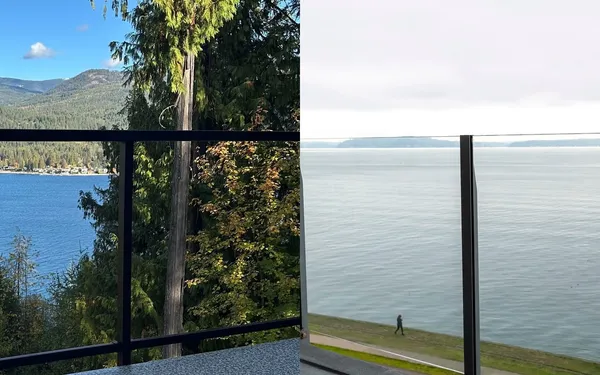
Coastal exposure. Salt air is the toughest environment for any exterior product. The aluminum handles it, that's its strength. But salt deposits can accumulate on the powder coat surface and, over time, affect the appearance if left uncleaned. The fix is simple: rinse the railing after major storms and at the end of winter. Our dealers on the Sunshine Coast and in the Atlantic provinces tell us the homeowners who rinse their railing twice a year have systems that look brand new after a decade. The ones who never rinse start to see surface dulling after 5-7 years. The aluminum underneath is fine either way, it's purely cosmetic. Worth noting: our finish warranty is reduced from 10 years to 5 for installations within 5 miles of the ocean. That's an industry-standard adjustment that reflects the reality of salt air, not a gap in the product.
Installation quality. A railing is only as strong as what it's bolted to. We can engineer a post to handle 555 lbs of force (tested by Intertek), but if that post is bolted into a rotting rim joist with undersized screws, the connection fails long before the railing does. Proper blocking at post locations, through-bolting into structural framing, and using the specified fasteners and base plates are what turn a 30-year railing into an actual 30-year installation.
Coating quality. An AAMA 2603 coating on a 2-stage pretreated surface will look noticeably worse within 5 years than an AAMA 2604 coating on a 5-stage pretreated surface. If you're comparing railing products and the manufacturer can't tell you their AAMA rating and pretreatment process, that's a red flag. We publish ours because we're confident in it. Tiger Drylac and AkzoNobel audit our coating line annually.
Physical damage. Powder coating is harder than liquid paint, but it can be chipped by impact. A ladder banging against the rail, heavy patio furniture being dragged past it, a lawnmower throwing a rock at a post. Small chips are cosmetic and can be touched up with a colour-matched touch-up pen available from your dealer. The key is to touch up chips early, before moisture gets under the coating at the chip point. An untreated chip in a coastal environment can eventually lead to localized surface corrosion. Not structural, but unsightly.
How to get the most years out of your railing
This is the entire maintenance program for aluminum deck railing. It takes about 20 minutes twice a year:
Wash it. Mild soap and water, 2-4 times per year. A garden hose and a soft cloth handle 95% of it. For stubborn dirt, any non-abrasive household cleaner works. Don't use steel wool, abrasive pads, or pressure washers. The powder coat is tough but not invincible.
Rinse salt. If you're coastal or in an area that uses road salt, rinse the railing after storms and at the end of winter. Salt is the one thing that can affect the finish if it's allowed to sit for months.
Touch up chips early. If you notice a chip, apply a touch-up pen from your dealer. A five-second fix prevents a cosmetic issue from becoming a long-term blemish.
Check hardware annually. Spend 10 minutes once a year checking that post fasteners are tight. Posts can loosen slightly over time due to deck movement from freeze-thaw cycles. A quick tightening pass keeps everything solid.
Keep drainage clear. Don't let water pool around post base plates. Make sure the deck surface drains away from the posts. Standing water doesn't damage the aluminum, but it can affect the deck framing underneath the base plate.
Glass care. If you have glass railing, standard glass cleaner and a squeegee keep the panels clear. Avoid abrasive pads. They can micro-scratch the glass surface over time. Rain does most of the cleaning for you on exterior glass.
Full cleaning instructions: Railing Care & Cleaning
The real cost of "cheaper" railing over time
This is the math that changes minds. A pressure-treated wood railing costs maybe $30-$50 per linear foot installed. An aluminum picket system costs $50-$100. So wood looks cheaper.
But wood needs staining or painting every 2-3 years. That's $500-$1,000 per cycle for a typical deck, call it $300 per year averaged out. Over 15 years (the realistic lifespan of a wood railing), that's $4,500 in maintenance. Then you replace the railing entirely, another $30-$50 per linear foot.
Aluminum costs more upfront and then costs nothing. No painting, no staining, no sealing, no replacement. Over 20 years, the total cost of ownership is lower than wood despite the higher initial price. Over 30 years, it's not even close.
Detailed pricing breakdown: Aluminum Deck Railing Costs in 2026
Ready to invest in railing that lasts? Find a dealer or get a quote for your project.
Our warranty
Every Innovative Aluminum railing system comes with a 20-year structural warranty and a 10-year finish warranty. Those numbers aren't aspirational. They're underwritten by annual independent certification testing from our powder suppliers, Tiger Drylac and AkzoNobel. They audit our coating line every year to confirm we're meeting the AAMA 2604 standard we claim.
The 10-year finish warranty is reduced to 5 years for installations within 5 miles of the ocean, because salt air is genuinely more demanding. That's us being honest about the environment, not hedging on the product. The aluminum structure is warranted the same 20 years regardless of location.
Full warranty details: Innovative Aluminum Warranty
Frequently asked questions
How long does aluminum deck railing last?
30+ years structurally. The powder coated finish holds for 20+ years when applied to AAMA 2604 standards with proper pretreatment. We warranty the structure for 20 years and the finish for 10. The most common "wear" item on glass systems is the rubber gaskets, which may need replacement after 15-20 years. Picket systems have no wear items at all.
Does aluminum railing rust?
No. Aluminum does not rust. Rust is an iron oxide reaction that only affects iron and steel. Aluminum forms a natural protective oxide layer that prevents corrosion. Powder coating adds a second layer of protection. This is why aluminum railing performs well in coastal, humid, and cold climates where steel or iron would corrode.
Is aluminum railing more durable than wood?
Significantly. Aluminum lasts 30+ years with virtually no maintenance. Soap and water twice a year. Wood lasts 10-15 years and needs staining or painting every 2-3 years. Wood rots, warps, cracks, splits, and attracts insects. Aluminum doesn't have any of those failure modes. Over 20 years, aluminum is both more durable and less expensive than wood when you factor in maintenance and replacement costs.
How do I maintain aluminum deck railing?
Wash with mild soap and water 2-4 times per year. Rinse salt deposits after storms if you're in a coastal area. Touch up any chips with a colour-matched pen from your dealer. Check post fasteners once a year. That's the entire program. About 20 minutes twice a year.
What is the difference between AAMA 2603 and AAMA 2604 powder coating?
AAMA 2603 is rated for 1 year of exterior performance. Budget manufacturers use this. AAMA 2604 is rated for 5 years and, with proper pretreatment, holds for 20+ years in real-world conditions. The difference shows up in year 3-5 when the 2603 finish starts chalking and the 2604 still looks sharp. Innovative Aluminum applies AAMA 2604 as standard on every system.
Does aluminum railing work in coastal environments?
Yes. Aluminum is one of the best railing materials for coastal use because it doesn't corrode from salt exposure the way steel does. The powder coat finish protects against cosmetic salt buildup. Rinsing the railing after storms and at the end of winter keeps coastal installations looking new for decades. We ship to dealers on the BC coast, the Atlantic provinces, and the Pacific Northwest, some of the most demanding coastal environments in North America.