How much aluminum deck railing costs per linear foot, what affects the price, how it compares to wood and vinyl over 20 years, and how to get an accurate quote.
This article is part of our complete Aluminum Deck Railing guide.
Aluminum deck railing typically costs between $50 and $200 per linear foot installed across the industry. Picket systems sit at the low end. Glass component railing lands in the middle. Frameless glass is at the top. The exact price depends on the system type, height, project complexity, your region, and whether you're paying for professional installation.
We don't publish our pricing publicly because we work through a dealer network, and pricing varies by project, region, and dealer. But we've been quoting railing projects since 2004, and we can walk you through what drives cost across the industry, how aluminum compares to other materials over time, and how to get an accurate quote for your specific deck.
Aluminum deck railing cost by system type
The single biggest factor in price is which system you choose. Here's what to expect across the three main categories:
| System | Industry cost range per LF (installed) | What you get |
|---|---|---|
| Aluminum picket | $50–$100 | Posts, top/bottom rail, vertical pickets. Classic look, lowest aluminum price point. |
| Glass component | $80–$150 | Aluminum posts and top rail with tempered glass infill. Open views with a structured frame. |
| Frameless / topless glass | $120–$200+ | No top rail. Glass panels in aluminum post channels. Maximum view, premium price. |
These ranges reflect industry averages including materials and professional installation. Supply-only pricing (materials without installation) is lower, but unless you have experience installing railing, professional installation is worth it, especially for glass systems where post alignment has to be exact.
We see picket projects come in at the low end of that range on simple straight-run decks with surface mount posts and a standard colour. The price moves toward the top end when there are multiple stair sections, corners, fascia mounting, or custom colour matching.
What affects the price
Two identical 40-foot decks can produce very different railing quotes. Here's what moves the number:
System type. Already covered above. The jump from picket to glass is significant because tempered glass panels are expensive to manufacture and heavy to ship.
Height. 42-inch railing costs more than 36-inch because there's more material per linear foot. If your local building code requires 42 inches (common on elevated decks and in some BC municipalities), budget accordingly.
Corners, angles, and transitions. A straight run of railing is the cheapest layout. Every corner requires a corner post and a sleeve connection. Every angle change adds complexity. Stair-to-deck transitions need special post configurations. A deck with 4 corners and a stair run costs more per foot than a simple straight section.
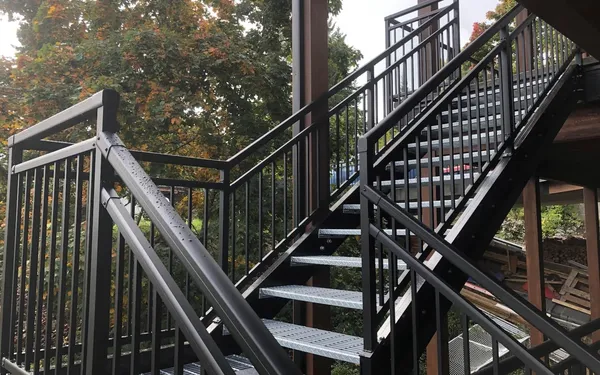
Stairs. Stair railing sections are more expensive than flat deck sections because the components are angled, the posts need adjustable brackets, and glass panels (if used) have to be custom-cut to match the stair pitch. Our Flex Rail system reduces some of this cost on picket stairs because it uses field-adjustable angles instead of custom-fabricated stair panels.
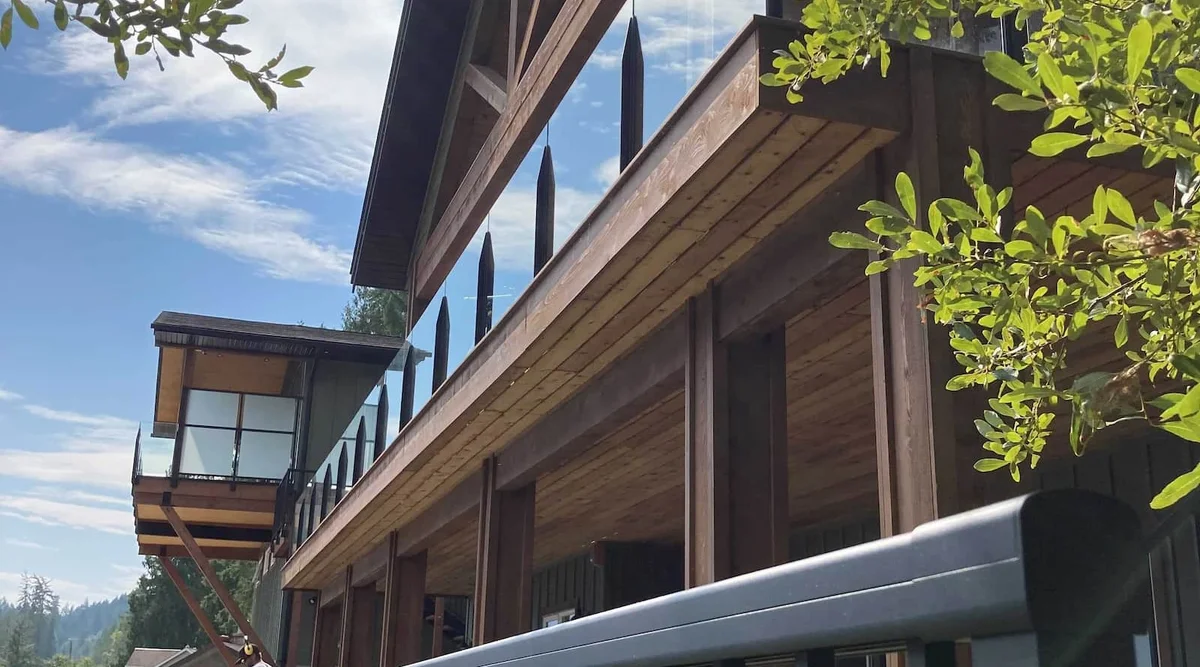
Mounting method. Surface mount (on top of the deck) is standard and included in most pricing. Fascia mount (side of the deck frame) can add cost if the framing needs modification or additional blocking. Our dealers in the Seattle area have done fascia mount infinity projects on concrete multi-family buildings with custom base plates welded to prepared steel. That kind of project is at the high end of the cost range for a reason.
Powder coating colour. Standard colours (Black, White, and the rest of our 14-colour lineup) are included in the base price. Custom colour matching is available but adds a surcharge for the custom powder run.
Region. Installation labour rates vary by market. Vancouver and Toronto are higher than rural BC or Alberta. US coastal markets tend to be higher than inland.
What you're paying for when you buy quality aluminum railing
Not all aluminum railing at the same price point is the same product. When you're comparing quotes, the price per foot doesn't tell you what's underneath.
Our systems use 6005-T61 aluminum extrusions with posts tested by Intertek to 315 lbs (regular wall) and 555 lbs (heavy wall). Every component goes through a 5-stage full submersion pretreatment before AAMA 2604 powder coating. Our powder comes from Tiger Drylac and AkzoNobel, and both suppliers audit our coating line annually.
A competitor's system at a similar price point might use thinner wall posts, a 2-stage pretreatment, and AAMA 2603 powder (rated for 1 year instead of 5). On day one, both railings look the same. In year 5, they don't. In year 10, the difference is obvious. The upfront cost is similar, but the 20-year cost is very different because the cheaper system needs maintenance or replacement sooner.
When comparing quotes, ask the manufacturer: what alloy are the posts? What's the wall thickness? What AAMA standard is the powder? How many stages is the pretreatment? Is the coating done in-house or outsourced? These questions separate a $75/ft railing that lasts 30 years from a $75/ft railing that starts showing its age in 5.
Cost to install deck railing: labour vs materials
When you see "$50 to $200 per linear foot installed," that number includes both the railing materials and the installation labour. Here's roughly how it breaks down:
| Component | Picket system | Glass component | Frameless glass |
|---|---|---|---|
| Materials | $35–$70/ft | $55–$110/ft | $80–$150/ft |
| Installation labour | $15–$30/ft | $25–$40/ft | $30–$50/ft |
| Total installed | $50–$100/ft | $80–$150/ft | $120–$200+/ft |
Labour cost for glass systems is higher because the panels are heavy, post alignment has to be precise, and the installer needs to handle tempered glass carefully. For the full breakdown of what's involved: Aluminum Deck Railing Installation. Picket systems are the most forgiving to install and the fastest. A competent installer can do a standard residential deck in a day or two.
DIY installation can save the labour portion, but we recommend it only for picket systems. Even for picket, DIY is only a good idea if you're confident anchoring posts into structural deck framing to meet building code requirements. Posts fastened to deck boards only won't pass inspection. Glass railing, especially frameless, requires precision that most homeowners don't have the tools or experience for. A misaligned post on a frameless system means the glass panel doesn't fit, and that's an expensive problem to fix on site.
Aluminum railing cost vs wood vs vinyl over 20 years
The upfront price comparison between materials is misleading. What matters is what you spend over the life of the railing, and that's where aluminum pulls ahead of everything except vinyl.
| Material | Upfront cost/ft | Total maintenance cost/ft (20 yrs) | Replacement? | 20-year total cost/ft |
|---|---|---|---|---|
| Aluminum picket | $50–$100 | ~$0 | No | $50–$100 |
| Pressure-treated wood | $30–$50 | $50 - $80 (staining 7-8x) | Yes, at year 10-15 | $110–$180 |
| Cedar | $40–$70 | $80 - $140 (sealing 10-13x) | Possibly at year 15-20 | $120–$210 |
| Vinyl | $25–$60 | ~$0 | Possibly (cold-climate brittleness) | $25–$120 |
| Composite | $50–$80 | $10 - $30 (occasional cleaning) | Unlikely | $60–$110 |
Wood is the cheapest on day one and the most expensive over 20 years. That $40/ft pressure-treated railing turns into $150+ when you add seven rounds of staining and a full replacement at year 12. Aluminum starts higher and stays flat. No staining, no painting, no replacing. Soap and water.
Vinyl is the only material that competes with aluminum on total cost. But vinyl is limited in style, colour, and design options, and it can become brittle and crack in Canadian winters. Aluminum gives you 14+ colour choices, glass or picket infill, and a 30+ year lifespan in any climate.
For coastal installations, it's worth noting that our finish warranty is reduced from 10 years to 5 for properties within 5 miles of the ocean. That's an industry-standard adjustment for salt air. The aluminum structure is warranted the same 20 years regardless of location. Even with the coastal adjustment, the 20-year total cost holds because the material itself doesn't degrade.
For a deeper material comparison: Aluminum vs. Steel, Wood or Vinyl
How to get an accurate quote: our Online Railing Designer
Industry price ranges are useful for budgeting, but every deck is different. A 40-foot straight run with no stairs costs very differently than a 40-foot perimeter with 4 corners, a stair section, and a transition to a different level. The only way to get an accurate number is to design the actual layout.
That's why we built the Online Railing Designer: a browser-based tool that eliminates the guesswork from railing quoting.
Railing layouts hide complexity. Corners need corner posts. Stair runs need angle brackets and custom-cut panels. Transitions between levels need specific post configurations. When parts lists are built manually (counting posts, measuring sections, estimating glass panels), small miscounts compound. A missed corner post or an underestimated stair section throws the entire quote off.
The designer ties the visual layout, the 3D review, and the parts list together in one place. What you see is what you're quoting. No disconnection between the design and the price.
How it works:
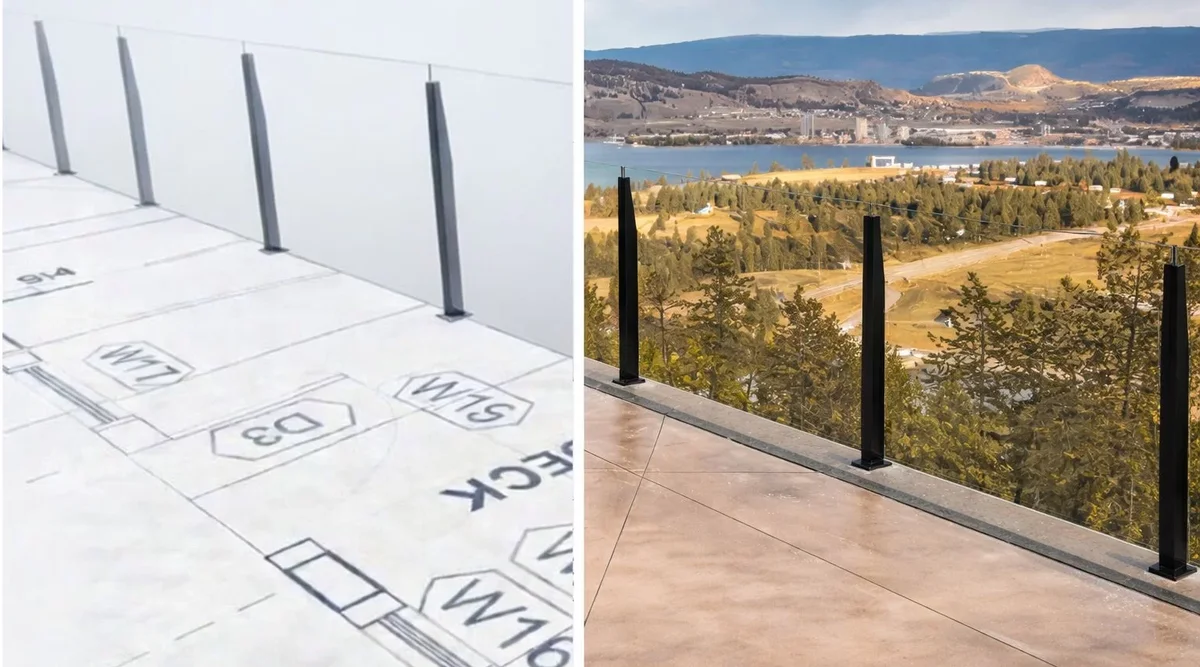
Import or draw your layout. Start with a blueprint or sketch your deck dimensions to scale. Drop in posts, set rail sections, define corners and stair runs.
Choose your system. Select picket, glass component, or Infinity Topless. Pick your colour, top rail profile, height, and mounting method. The designer knows which parts go where.
Review in 3D. Rotate the model, check sightlines, verify the layout matches what you want. Catch problems before they become on-site problems.
Generate the parts list. Every post, rail section, panel, bracket, and fastener is itemized, counted, and priced. The version of the design you're reviewing is always the version driving the quote. No manual spreadsheets, no missed components.
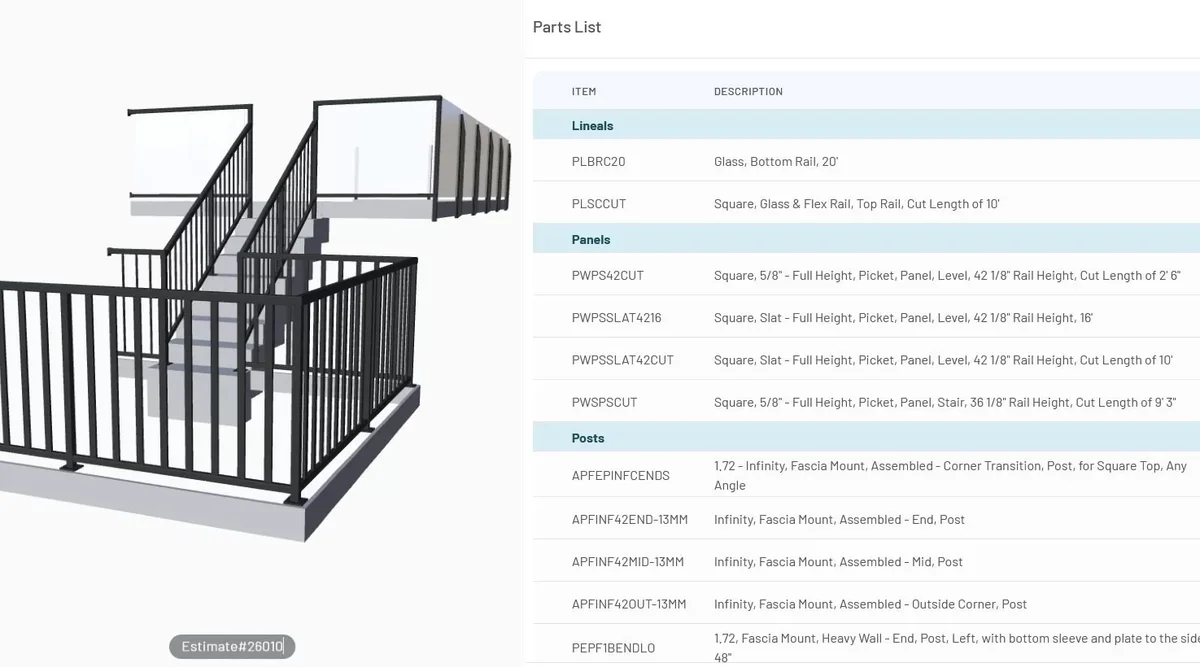
The designer saves costs in ways that aren't obvious at first. When the parts list is generated from the actual layout, there's no over-ordering (which wastes money) and no under-ordering (which delays the project and adds a second shipping charge). Corners, transitions, and stair sections are accounted for automatically instead of being estimated by hand. For dealers and contractors, that accuracy means tighter quotes and fewer callbacks.
The Online Railing Designer is available through our dealer network. Contact us for access, or find a dealer near you to get started with a quote for your project.
Ready to price your project? Contact us for access to the Online Railing Designer. There's no cost to use it, no commitment, and most users are building their first layout within minutes. We also offer a free consultation call to walk you through your options before you spend a dollar.
How much does glass deck railing cost?
Glass railing is the premium option, and the price reflects it. Here's what drives the cost:
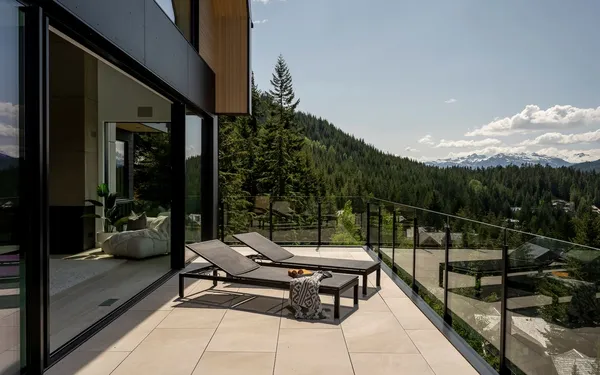
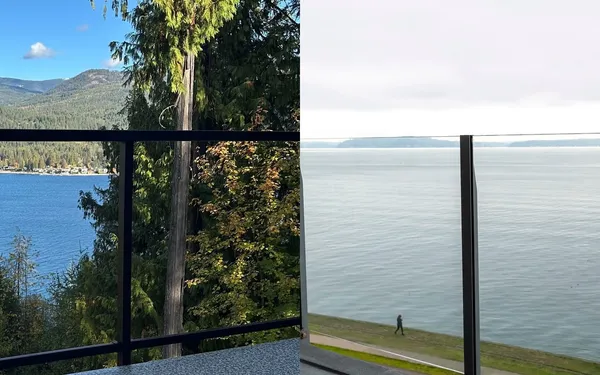
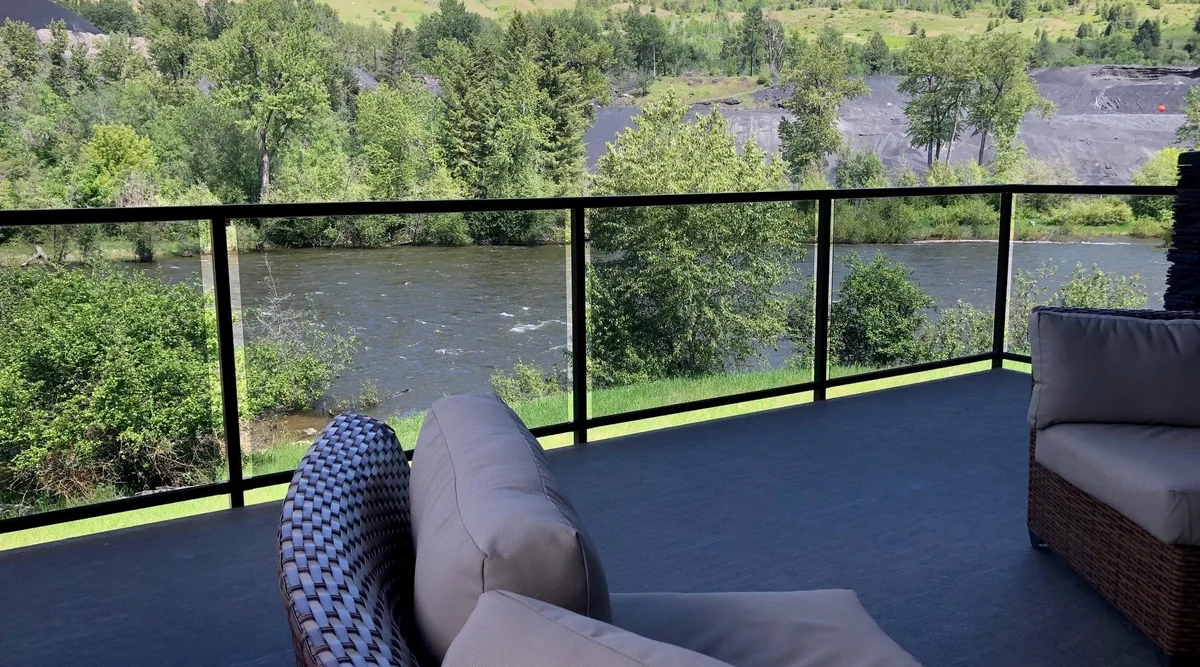
Glass component (framed) runs $80 to $150 per linear foot installed. Aluminum posts and a top rail with tempered glass panels in between. The glass adds significant material cost over picket infill, and installation takes longer because the panels are heavy and need to be set precisely into the channels. This is the most popular glass option for residential decks. It gives you the view without the frameless price tag. The Rossland, BC installation overlooking the river is a glass component system, and it shows what you get at the mid-range glass price point: full view preservation with the structural simplicity of a framed system.
Frameless (topless) glass runs $120 to $200+ per linear foot installed. No top rail. The glass panels stand in post channels with minimal framing. The glass is typically thicker than component systems (to compensate for having no top rail), the posts need tighter tolerances, and installation is the most demanding of any railing type. The result is the cleanest, most unobstructed view, but it's a premium product at a premium price. The Gill Cove, Nova Scotia infinity installation on the Atlantic coast is at the high end of that range because of the coastal engineering requirements and the exposed site conditions.
The price of glass railing also varies with panel height, glass thickness, post spacing, and whether the project includes curved sections or stairs. Stair sections with glass are more expensive than flat sections because each panel has to be custom-cut to match the stair angle.
Frequently asked questions
How much does aluminum deck railing cost per foot?
$50 to $200 per linear foot installed, depending on the system. Aluminum picket runs $50 to $100/ft. Glass component runs $80 to $150/ft. Frameless glass runs $120 to $200+/ft. These include materials and professional installation.
How much does it cost to install deck railing?
Installation labour runs $15 to $50 per linear foot depending on the system and your region. Picket systems are the cheapest and fastest to install. Glass systems cost more because post alignment has to be precise and the panels are heavy. A typical 40-foot residential deck might run $600 to $2,000 in labour alone.
Is aluminum railing cheaper than glass railing?
Aluminum picket is the most affordable aluminum option at $50 to $100/ft installed. Glass component is $80 to $150/ft, and frameless glass is $120 to $200+/ft. The difference is driven by the tempered glass panels and the precision installation they require.
Is aluminum railing more expensive than wood?
Upfront, yes. Aluminum picket starts at $50/ft versus $30 to $50/ft for pressure-treated wood. But over 20 years, wood costs $110 to $180/ft when you add maintenance (staining every 2 to 3 years) and replacement (at year 10 to 15). Aluminum stays at $50 to $100/ft with zero maintenance. Aluminum is the cheaper material over any time horizon longer than about 5 years.
How much does glass deck railing cost per foot?
Glass component railing costs $80 to $150 per linear foot installed. Frameless (topless) glass costs $120 to $200+ per foot. The price varies with glass thickness, panel height, post spacing, and project complexity. Stair sections with glass cost more than level sections because each panel is custom-cut to the stair angle.
What is the cheapest type of deck railing?
Vinyl is the cheapest at $25 to $60 per foot, followed by pressure-treated wood at $30 to $50. Both have trade-offs: vinyl can become brittle in cold climates and has limited style options, while wood requires staining every 2 to 3 years and typically needs full replacement within 10 to 15 years. Aluminum picket at $50 to $100/ft is the cheapest option that requires zero maintenance over its 30+ year lifespan.