Comparing every type of deck railing — aluminum, wood, vinyl, composite, cable, and glass — by cost, durability, maintenance, and style.
Every type of deck railing, compared
Here's the short version:
If you want maximum view: frameless glass.
If you want long-term value: aluminum picket.
If you want the cheapest upfront cost: pressure-treated wood.
If you want low cost plus maintenance-free: vinyl.
If you want a modern horizontal look: cable.
And here's the detailed breakdown:
| Railing type | Cost per foot (installed) | Lifespan | Maintenance | View clarity | Best for |
|---|---|---|---|---|---|
| Aluminum picket | $50–$100 | 30+ yrs | Soap and water | Partial | Long-term value, families |
| Glass component | $80–$150 | 30+ yrs | Soap and water, glass cleaner | Mostly open | Views, modern homes |
| Frameless glass | $120–$200+ | 30+ yrs | Glass cleaner | Fully open | Premium view properties |
| Cable railing | $60–$200 | 25+ yrs | Re-tension every 1-2 years | Mostly open | Modern/industrial look |
| Pressure-treated wood | $30–$70 | 10–15 yrs | Stain/paint every 2–3 yrs | Partial | Lowest upfront cost |
| Vinyl / PVC | $25–$60 | 20–25 yrs | Minimal | Partial | Budget + low maintenance |
| Composite | $50–$80 | 25–30 yrs | Low, but can stain and mould | Partial | Wood look, less upkeep |
| Wrought iron / steel | $60-$120 | 20-30 years | Scrape and repaint regularly | Partial | Traditional, ornamental |
Aluminum picket railing
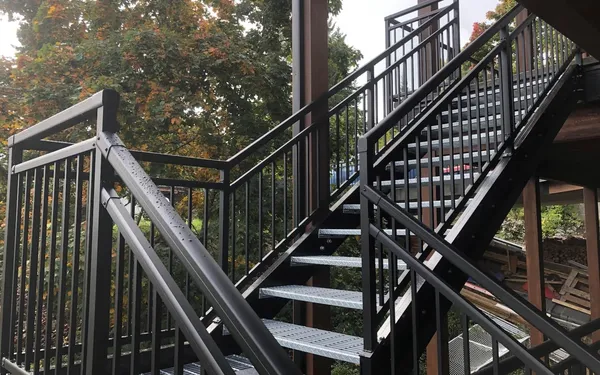
This is the workhorse. Aluminum picket railing lasts 30+ years, needs nothing beyond soap and water, and comes factory-welded with code-compliant picket spacing so there's no field assembly to get wrong. It's the system we ship the most of, and it's the one our dealers recommend most often for residential decks where durability and low maintenance matter more than maximizing the view.
The cost sits in the middle of the pack at $50 to $100 per linear foot installed, but the total cost over 20 years is lower than wood because there's no painting, staining, sealing, or replacement. We've shipped picket systems everywhere from Whistler, BC to New Jersey, and we've seen them on single-family decks, multi-family balconies, and commercial walkways. The multi-family project in Gibsons, BC, installed by Sun Pro Enterprises, is a good example of how the standard picket package holds up across multiple storeys and full weather exposure with zero callback maintenance.
Picket does block some of the view. If unobstructed sightlines matter, glass is the better option. But for families, rentals, and anyone who wants to bolt it down and forget about it, aluminum picket is hard to beat.
Glass component railing
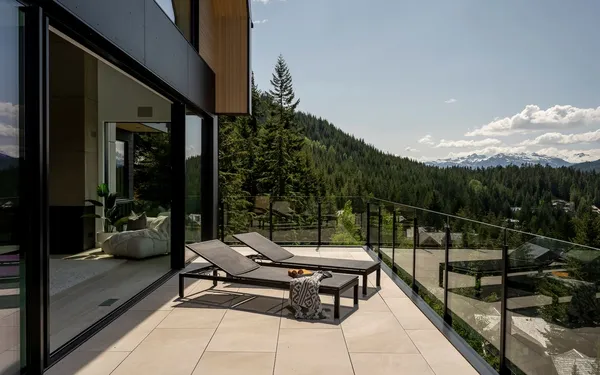
Glass component railing uses aluminum posts, a top rail, and tempered glass panels as the infill between posts. You get most of the view preservation of frameless glass with the structural simplicity of a framed system. The top rail adds rigidity, provides a surface to lean on, and gives the system a finished look.
At $80 to $150 per foot installed, it's the mid-range glass option. The aluminum frame and glass panels last 30+ years. The only wear component is the rubber gaskets that hold the glass in place, and those typically last 15 to 20 years before needing replacement.
We see glass component systems on elevated decks, waterfront properties, and modern homes across BC's Sunshine Coast, the Gulf Islands, and the Pacific Northwest. The Rossland, BC installation overlooking the river is a good example. It's fully exposed to moisture and temperature swings year-round, and the glass and aluminum are holding up exactly as expected. For homeowners who want a view but don't need (or want to pay for) the full frameless look, glass component is the sweet spot.
Frameless (topless) glass railing
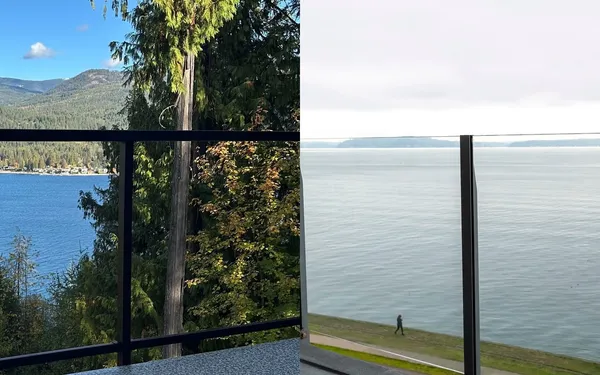
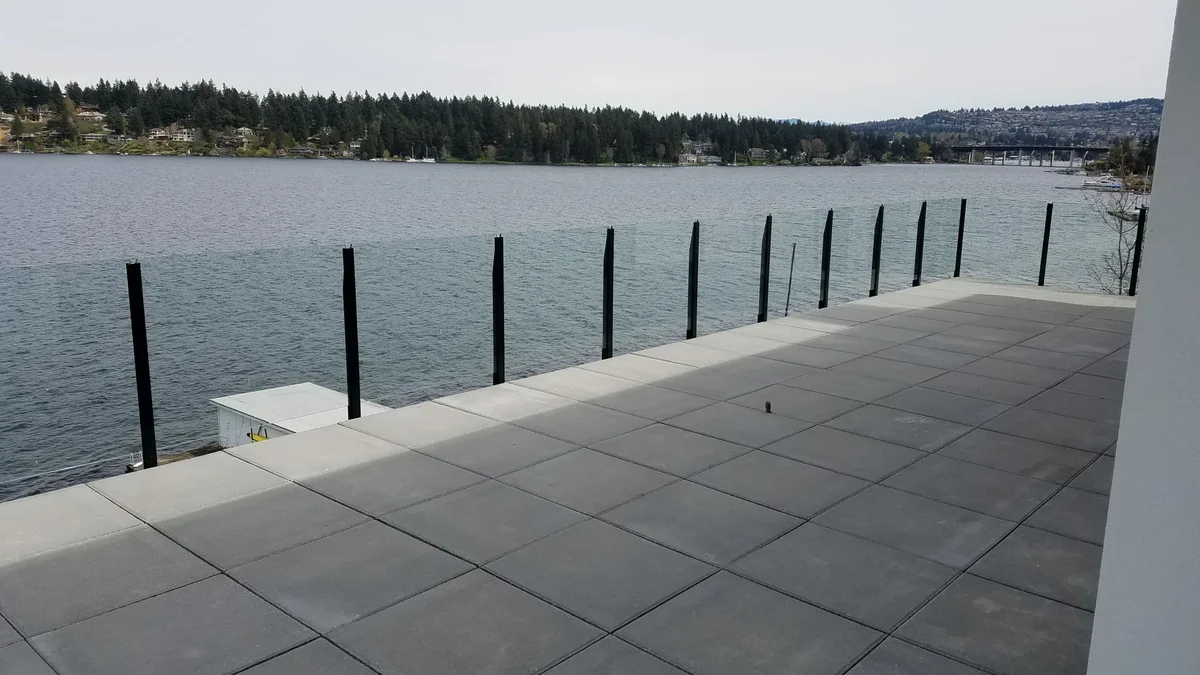
Frameless glass railing eliminates the top rail entirely. The glass panels extend above the posts, creating the cleanest possible sightline. This is the system waterfront and mountain-view property owners ask for by name. Our Infinity Topless system is our most-requested product for view properties, and the Gill Cove, Nova Scotia installation on the Atlantic coast is a good example of what it looks like when you don't want anything between you and the ocean.
At $120 to $200+ per foot installed, it's the premium option. The view is worth the price for the right property, but it's not the right choice for every deck. Frameless glass works best on elevated decks where the view justifies the investment, on properties where wind protection matters (glass blocks wind, cables and pickets don't), and on modern or contemporary architecture where minimal framing is part of the design language.
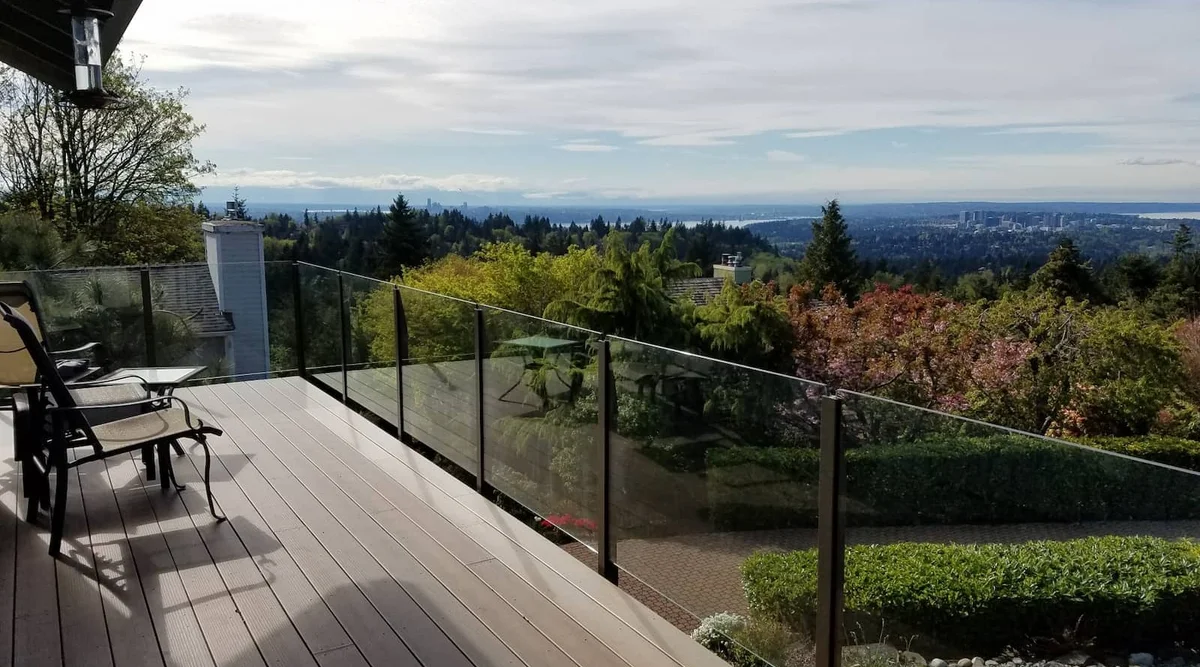
One thing to be aware of: some municipalities require a project-specific engineer's stamp for frameless glass systems on elevated decks, particularly in high-wind locations. Our engineering team handles this regularly, but it's worth confirming with your local building department before ordering.
Cable deck railing
We don't manufacture cable railing, so here's the honest take from a competitor's perspective.
Cable railing systems use horizontal stainless steel cables strung between metal posts (usually aluminum or steel). The aesthetic is distinctly modern and industrial, with clean horizontal lines that work well on contemporary homes. Cable deck railing is one of the most-searched railing types online, and the look is genuinely appealing.
The cost ranges from $60 to $200 per foot depending on the post material, cable quality, and whether you're buying a kit or a custom system. Cable railing systems for decks typically use either aluminum or stainless steel posts. The cables themselves are stainless steel.
The trade-offs are real, though. Cables need re-tensioning every 1 to 2 years as they stretch. Horizontal cable railing creates evenly spaced footholds that children can climb, and some building codes restrict horizontal infill on guards above certain heights because of this. We've heard from our dealers about homeowners who installed cable railing, failed their building inspection on climbability, and had to replace the entire infill with vertical pickets at their own expense. Before you commit to cable, check your local code requirements.
Cable also doesn't block wind. On an exposed, elevated deck, that can be a practical disadvantage compared to glass, which acts as a wind barrier while still preserving the view.
Where cable works well: lower decks, interior courtyards, covered patios, and homes going for a specific industrial or modern farmhouse aesthetic where the horizontal lines are part of the design intent.
Wood deck railing
Wood is the cheapest upfront option at $30 to $70 per linear foot installed, and it's the most widely available. Pressure-treated lumber is sold at every building supply store. Any carpenter can build a wood railing. There's no special tooling, no manufacturer to order from, no lead time.
The downside is everything after the installation. Wood railing needs staining or painting every 2 to 3 years. It rots, warps, cracks, splits, and attracts insects. In a coastal environment, the lifespan drops to 5 to 8 years. In a dry, sheltered location, you might get 15. But you're maintaining it the entire time.
The honest math: a $40/ft wood railing plus maintenance over 15 years (staining at $5 to $10/ft every 2 to 3 years) plus one full replacement totals over $100/ft in lifetime cost. An aluminum picket system at $50 to $100/ft costs exactly that amount over 30 years with zero maintenance. Wood is cheaper for the first 3 years. Aluminum is cheaper for every year after that.
If you're selling the property within 2 to 3 years and budget is tight, wood makes financial sense. If you're staying longer than that, it doesn't. For more on this: Aluminum Deck Railing Costs in 2026.
Vinyl and composite railing
Vinyl (PVC) railing is the budget low-maintenance option at $25 to $60 per foot. The colour goes all the way through the material, so scratches don't show a different layer underneath. It doesn't need painting or staining.
The issues show up in extreme climates. Vinyl becomes brittle in sustained cold and can crack on impact during winter. It can warp and sag in prolonged heat. The profiles tend to be thicker and chunkier than aluminum, and the colour options are limited (mostly white, tan, and grey). For Canadian winters and hot BC summers, vinyl's performance range gets tested.
Composite railing gives you a wood-grain look with less maintenance than real wood. It costs $50 to $80 per foot and lasts 25 to 30 years. The trade-off is that composite can develop water stains, grow mould in shaded or damp areas, and fade over time. It's better than wood for maintenance, but it's not zero-maintenance the way aluminum is.
Wrought iron and steel railing
Steel and wrought iron create a traditional, ornamental look that works on specific architectural styles. The material is strong and the aesthetic is distinctive.
The problem is rust. Steel contains iron, and iron rusts. Even galvanized or powder-coated steel will eventually develop rust spots, especially in coastal or humid environments. Maintaining steel railing means scraping, priming, and repainting on a regular cycle. Once corrosion starts, it spreads. A small rust spot left untreated becomes a structural concern over time.
Aluminum gives you a similar metal railing look with none of the corrosion risk. Aluminum doesn't contain iron, so it physically cannot rust. If the look you want is a clean metal railing with modern lines, aluminum delivers that without the maintenance penalty. For more on the material comparison: Aluminum vs. Steel, Wood or Vinyl.
Best deck railing for views
First choice: frameless glass. Eliminates the top rail entirely for maximum sightline clarity. This is what our dealers recommend for waterfront, lakefront, and mountain-view properties where the view is the reason you built the deck.
Second choice: glass component. Aluminum posts and top rail with glass infill. You lose a thin strip of view at the top rail, but the glass panels keep 90%+ of the sightline open. Better value than frameless for elevated decks where some view obstruction is acceptable.
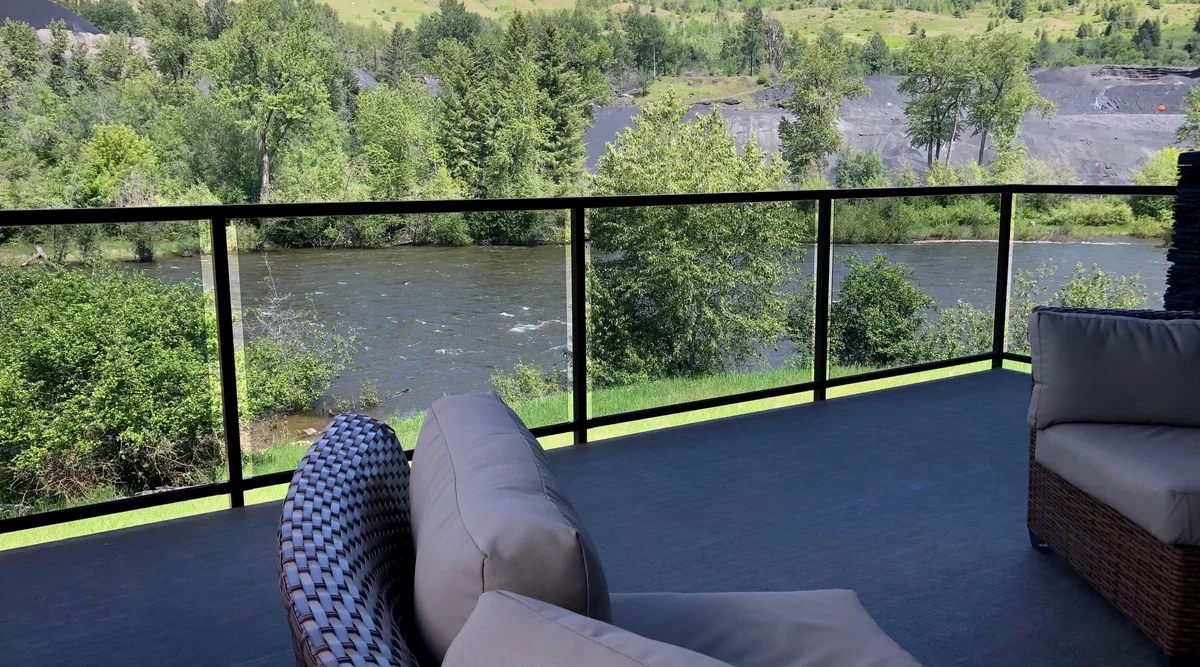
Also viable: cable railing. Horizontal cables are visually lighter than pickets, but they don't disappear the way glass does. Cables also don't block wind, which can be a practical disadvantage on exposed, elevated decks.
Want to see what glass railing looks like on a view property? Browse our design gallery or get a quote for your project.
Best deck railing for families
Aluminum picket is the safest conventional option. Vertical pickets spaced at the factory to meet the 4-inch rule, no gaps, no climbable horizontal elements. The picket spacing is set before the system ever leaves our plant in Aldergrove, so there's no field measurement to get wrong. Our dealers tell us that picket railing passes building inspection faster than any other type because inspectors can see immediately that the spacing is consistent and code-compliant.
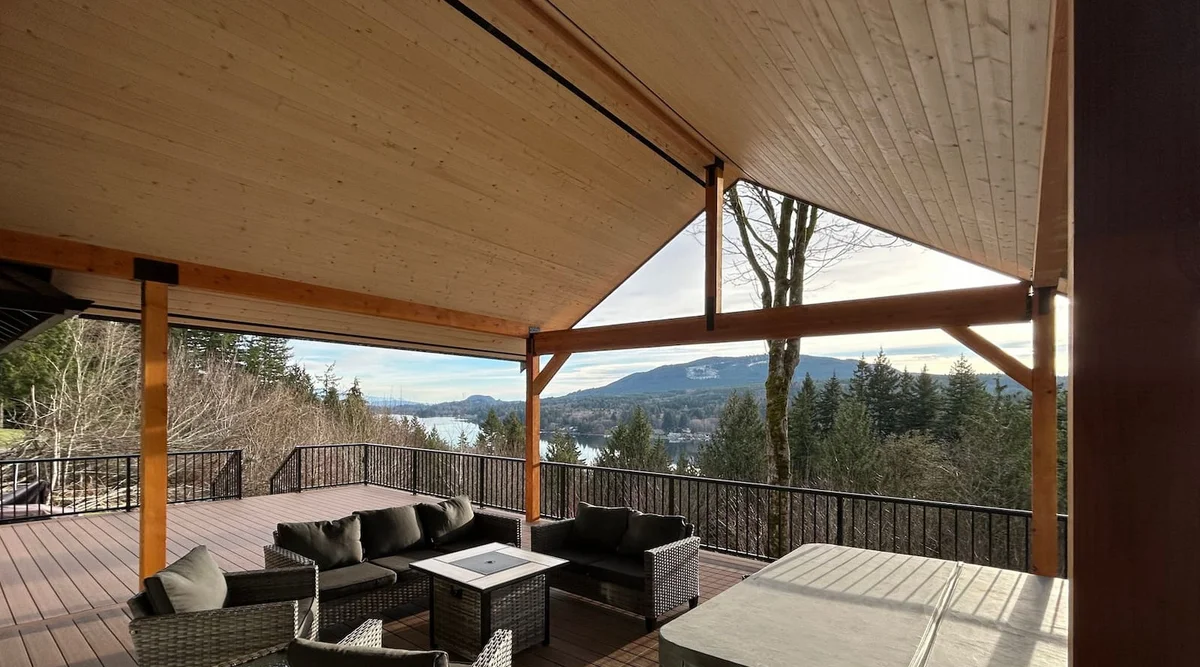
Glass railing is also safe. A solid, continuous barrier with no gaps for children or pets to squeeze through. The trade-off is fingerprints. If you have young kids, you'll be cleaning the glass more often than you'd like. Some homeowners solve this by using glass on the level deck (where the view matters) and picket on the stairs (where fingerprints are constant).
Cable railing needs careful consideration with young children. Horizontal cables create evenly spaced footholds that kids can and will climb. Some building codes restrict horizontal infill specifically because of this. In Powell River, BC, the local municipality required our dealer Modern Powell River to use a colonial top rail profile on the stairs for graspability, and we've seen similar code-driven design decisions across the country. Before choosing cable for a family home, check your local building code requirements.
Best deck railing for coastal and harsh weather
We ship railing to dealers on the BC coast, across the Pacific Northwest, into the Atlantic provinces, and throughout the northern US. Here's what holds up and what doesn't:
Aluminum passes. No rust (aluminum doesn't contain iron), powder coating resists salt and UV, no warping from moisture. Our installation in Gill Cove, Nova Scotia faces direct Atlantic salt air year-round. The Whistler, BC project installed by Whistler Glass goes through full freeze-thaw cycles with heavy snow load in winter and UV exposure in summer. Both are holding up without any structural or cosmetic issues. Worth noting: our finish warranty is reduced from 10 years to 5 for installations within 5 miles of the ocean. That's an industry-standard adjustment that reflects the reality of salt air, not a gap in the product.
Glass passes. Tempered glass is unaffected by salt, moisture, or UV. It also blocks wind, which is a practical advantage on elevated, exposed decks that other railing types don't offer.
Wood struggles. Salt accelerates rot, moisture causes swelling and warping, and UV bleaches the finish. In a coastal environment, wood railing lifespan drops to 5 to 8 years even with regular maintenance.
Steel and iron fail. Rust develops despite galvanizing or powder coating. In salt air, corrosion can start within a few years and spread rapidly once it gets under the coating.
Cable holds up structurally but stainless steel cables can develop surface corrosion in salt air (often called "tea staining"). It's cosmetic, not structural, but it affects the appearance.
For the full durability breakdown: How Long Does Aluminum Deck Railing Last?
Best deck railing for modern homes
Modern architecture prioritizes clean lines, minimal ornamentation, and materials that integrate with the design rather than competing with it. The railing types that work best with contemporary homes are:
Frameless glass for maximum visual minimalism. The railing nearly disappears, letting the architecture speak for itself.
Glass component with a flat or square top rail profile for a clean horizontal line that frames the view without dominating it.
Horizontal cable railing for a distinctly modern, industrial aesthetic. The horizontal lines complement flat rooflines and open floor plans.
Slim-profile aluminum picket in black or dark bronze for a modern take on the classic vertical picket. Square top rail profiles read cleaner than round or colonial options on contemporary homes.
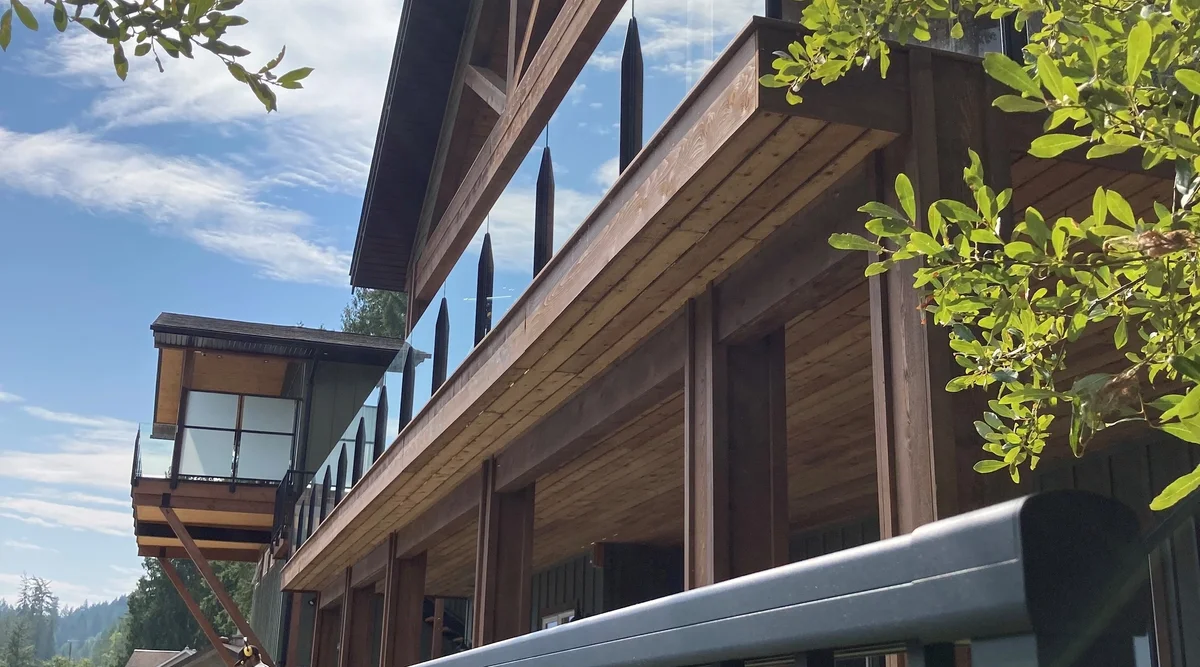
The Christina Lake, BC project installed by Grand Forks Deck and Rail is a good example of how different railing types can work together on one property. That installation combines aluminum picket, infinity topless glass, and privacy screen panels, each used where it makes the most sense architecturally. It's the kind of multi-product approach that works on properties where different areas of the deck have different needs.
For visual inspiration: Aluminum Deck Railing Design Ideas.
Aluminum vs wood deck railing
This is the comparison most people are actually making when they search for deck railing options. Here's the honest breakdown:
Wood advantages: Lower upfront cost ($30 to $70/ft vs $50 to $200/ft), widely available at any building supply store, warm natural appearance, any carpenter can install it.
Aluminum advantages: 30+ year lifespan vs 10 to 15 for wood, zero maintenance vs staining every 2 to 3 years, factory-welded picket spacing that's code-compliant out of the box, engineered strength with Intertek-tested posts and JCJ Design Engineering certification, and lower total cost over 20 years when you factor in maintenance and replacement.
The decision comes down to time horizon. If you're selling the property within 3 years, wood may make financial sense because you'll never pay for the maintenance cycle. If you're staying for 10 years or more, aluminum is the better investment every time. The math isn't close over a 20-year window.
Glass railing vs cable railing
This comparison comes up constantly because both options preserve the view, and they're often considered for the same types of properties.
Glass wins on: clearer views (the glass nearly disappears, cables remain visible as horizontal lines), wind blocking (glass acts as a barrier, cables let wind through), child safety (solid barrier vs climbable horizontal cables), and less ongoing maintenance (no re-tensioning).
Cable wins on: lower cost in most configurations ($60 to $150/ft vs $80 to $200+/ft for glass), a specific horizontal aesthetic that some homeowners prefer, and lighter visual weight on smaller or lower decks where wind protection isn't needed.
For waterfront properties and elevated decks with wind exposure, glass is the practical winner. For lower decks, interior courtyards, covered patios, or homes going for a modern industrial look, cable can be the right choice.
Ready to figure out which system fits your deck? Find a dealer near you or request a quote. Our team can help you evaluate the right product for your specific property, budget, and priorities.
Frequently asked questions
What is the best type of deck railing?
It depends on your priorities. Aluminum picket is the best all-around choice for durability and zero maintenance. Glass (component or frameless) is best for preserving views. Cable railing gives a modern horizontal look but requires periodic tensioning and may face code restrictions on climbability. Wood is cheapest upfront but costs more over time due to maintenance. For most homeowners looking for an install-and-forget solution, powder coated aluminum is the best value.
Is cable railing cheaper than glass?
Usually, yes. Cable railing systems for decks run $60 to $150 per foot installed, while glass component starts at $80 and frameless glass starts at $120. However, cable requires re-tensioning every 1 to 2 years (a maintenance cost glass doesn't have), and cable may face building code restrictions on climbability that glass doesn't.
What is the most low-maintenance deck railing?
Powder coated aluminum. It requires only soap and water 2 to 4 times per year. No painting, no staining, no sealing, no sanding, no re-tensioning. An AAMA 2604 powder coat finish holds colour and gloss for 20+ years. Vinyl is also low-maintenance but can become brittle in cold and warp in heat. Composite needs less upkeep than wood but can stain and mould.
Is aluminum railing better than vinyl?
For longevity and performance in extreme climates, yes. Aluminum lasts 30+ years and performs consistently in both Canadian winters and hot summers. Vinyl lasts 20 to 25 years but becomes brittle in sustained cold and can warp in heat. Aluminum also offers slimmer profiles, more colour options, and a more refined appearance. Vinyl costs less upfront ($25 to $60/ft vs $50 to $100/ft for aluminum picket) but the lifespan and performance gap favours aluminum in most climates.
What deck railing is best for views?
Frameless (topless) glass provides the most unobstructed view because it eliminates the top rail entirely. Glass component railing is the next best option, preserving 90%+ of the sightline with a slim top rail. Cable railing also preserves views but the horizontal cables remain visible and don't block wind. For waterfront and mountain-view properties, glass is the standard recommendation.
Is horizontal deck railing allowed by building code?
It depends on your jurisdiction. Horizontal elements between 140 mm and 900 mm above the deck surface can be considered climbable, and some building codes restrict them on guards above certain heights. Cable railing and decks with horizontal rails are the most commonly affected. Vertical pickets and glass panels don't have this issue. Always confirm with your local building department before committing to horizontal railing.