Non-combustible vs ignition-resistant vs combustible deck materials compared. Aluminum, glass, composite, and wood rated by fire performance, ember risk, and WUI code compliance.
This article is part of our complete Aluminum Deck Railing guide.
No decking material is truly fireproof. But some don't burn at all, some resist ignition, and some turn into fuel the moment an ember lands on them. If you're building or replacing a deck, especially in BC, the Pacific Northwest, Colorado, or California, the fire performance of every material on that deck matters. Not just the boards. The railing, the framing, the fasteners, and even what's stored underneath.
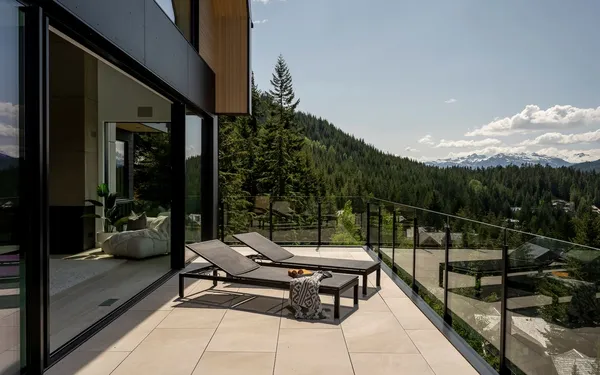
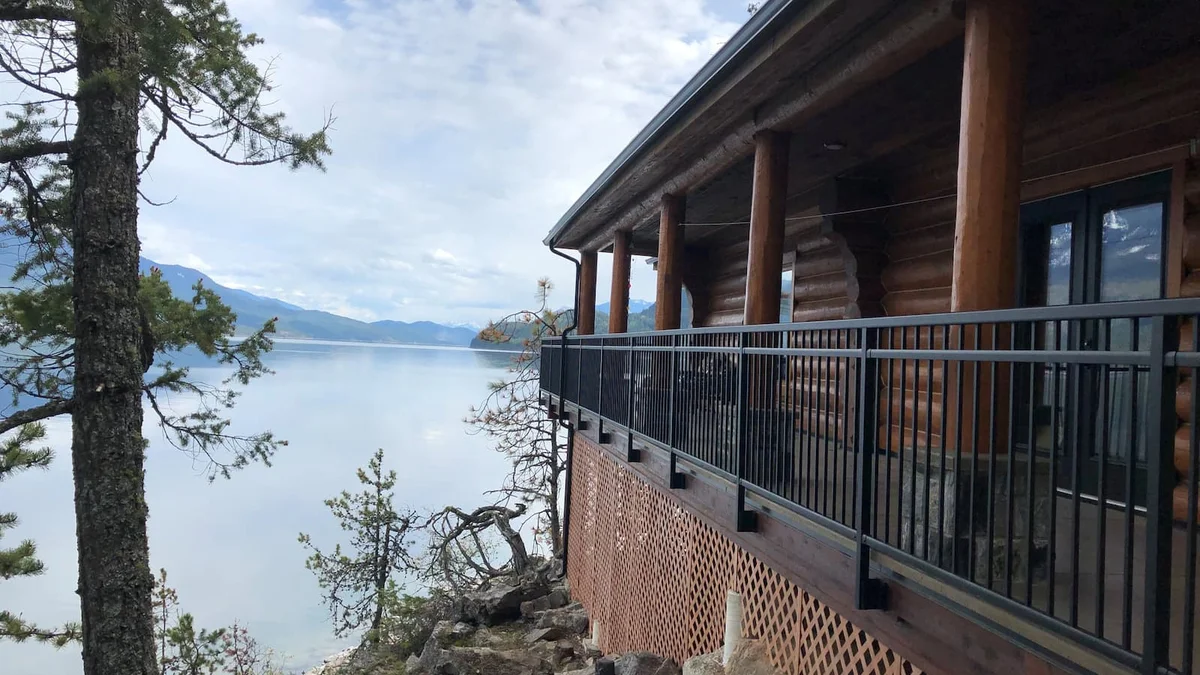
We manufacture aluminum and glass railing systems at our facility in Aldergrove, BC, a region that's seen increasingly severe wildfire seasons over the past decade. The Okanagan, the Fraser Valley, Vancouver Island: our dealers install railing across all of it, and fire-safe construction has gone from a niche concern to a standard conversation on nearly every project. The Whistler, BC projects installed by Whistler Glass sit in forested mountain terrain. The Christina Lake, BC project by Grand Forks Deck and Rail is surrounded by the dry interior landscape that burned across the province in recent summers. On projects like these, material choice isn't aesthetic. It's safety.
Here's what we know about how deck materials actually perform when fire is part of the equation.
[INSERT IMAGE HERE: Aluminum glass railing on a BC mountain property. Use Whistler or a similar forested mountain setting. Shows non-combustible railing in a wildfire-prone environment.]
What "fire resistant" actually means for deck materials
The term "fire resistant" gets thrown around loosely, and it causes confusion. There are three distinct categories and they mean very different things:
Non-combustible means the material will not ignite, burn, or contribute fuel to a fire at any temperature. It simply doesn't participate in combustion. Aluminum, steel, concrete, and glass are non-combustible. This is the highest level of fire safety for a building material.
Ignition-resistant means the material resists catching fire from embers and radiant heat, but it can eventually burn or melt under sustained direct flame. Premium PVC composite decking with a Class A flame spread rating falls into this category. It won't ignite from a stray ember the way wood would, but put a sustained flame on it and it will melt and eventually burn.
Fire-retardant treated means a combustible material (usually wood) has been chemically treated to slow the spread of flame. The wood can still burn. The treatment just buys time. And the treatment degrades over years of weather exposure, which means the fire resistance diminishes over time in an outdoor application like a deck.
When someone asks "is this decking fireproof?" the honest answer is that only non-combustible materials are truly fireproof. Everything else is on a spectrum of how long before it catches fire and how much fuel it adds.
How every deck material performs in fire
Here's a straightforward comparison of common deck materials rated by fire performance. This isn't marketing. It's based on material properties, ASTM E84 flame spread testing standards, and what we've seen specified on projects in WUI (Wildland-Urban Interface) zones across BC and the western US.
| Material | Combustible? | Flame Spread Class | Ember risk | WUI compliant? |
|---|---|---|---|---|
| Aluminum | No | N/A (non-combustible) | None | Yes, automatically |
| Tempered glass | No | N/A (non-combustible) | None | Yes, automatically |
| Steel | No | N/A (non-combustible) | None | Yes, automatically |
| PVC composite (premium) | Yes (melts) | Class A | Low | Some brands (check rating) |
| Capped composite | Yes (melts and burns) | Class B or C | Moderate | Rarely |
| Vinyl railing | Yes (melts quickly) | Varies | High | No |
| Pressure-treated wood | Yes (burns) | Class C | High | No (unless FRT treated) |
| Cedar / untreated wood | Yes (burns readily) | Class C | Very high | No |
The pattern is clear: metals and glass don't participate in fire at all. Premium composites resist ignition but aren't immune. Wood is fuel. When you're designing a deck with fire in mind, every component matters, and the railing is one of the most exposed parts of the structure because it sits at the perimeter, fully exposed to wind-driven embers.
Does aluminum burn?
No. Aluminum does not burn in any normal fire scenario. It's classified as non-combustible under both the National Building Code of Canada and the International Building Code.
Here's what actually happens: aluminum has a melting point of approximately 660 degrees Celsius (1,220 degrees Fahrenheit). At that temperature, it softens and eventually melts, but it doesn't ignite, produce flame, or contribute fuel to a fire. A wildfire burns at 800 to 1,000 degrees Celsius in the flame front, so aluminum exposed to direct wildfire flame will deform and melt. But it won't catch fire. It won't spread flame to adjacent materials. And in the far more common scenario of wind-blown embers landing on your deck (which is how most homes actually ignite during a wildfire), aluminum doesn't react at all. An ember sitting on an aluminum railing post does nothing. The same ember on a wood railing can start a fire.
Our railing posts are extruded from 6005-T61 aluminum and tested by Intertek to 315 lbs (regular wall) and 555 lbs (heavy wall). Our top and bottom rails use 6063-T6. Both are non-combustible alloys. The powder coat finish (AAMA 2604, applied in-house with Tiger Drylac and AkzoNobel powder) will char and discolour under extreme heat, but powder coating is essentially baked-on plastic powder and it doesn't produce meaningful flame spread. The substrate underneath remains structurally sound until you approach the melting point, which is well beyond any realistic ember exposure.
Does glass melt in fire?
Glass is non-combustible. It will not ignite, produce flame, or contribute fuel to a fire under any circumstances. Tempered glass (which is what's used in railing systems) softens at around 600 degrees Celsius but doesn't combust.
The real-world concern with glass in a fire isn't melting. It's thermal shock. If one side of a glass panel is suddenly exposed to intense heat while the other side remains cool, the uneven expansion can cause the glass to crack or shatter. This is why tempered glass is used rather than annealed glass: tempered glass is roughly four times more resistant to thermal stress. And in a railing application, the panels are small enough and supported on multiple sides that they handle temperature differentials well.
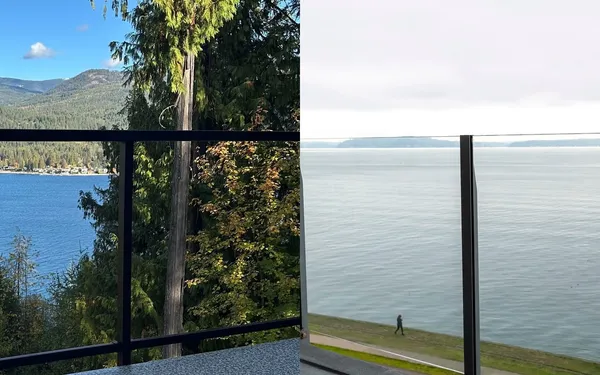
If you're looking at glass railing specifically for fire-prone areas, the key advantage is that glass panels create a solid barrier that blocks ember passage while being completely non-combustible themselves. A picket railing, even aluminum pickets, has gaps that embers can pass through. A glass panel is a solid wall against embers. On elevated decks in forested areas (like the Whistler and Christina Lake projects in our portfolio), glass railing serves double duty: the view AND the ember barrier.
Is composite decking fire resistant?
It depends entirely on which composite. There's a wide range of fire performance across the category, and lumping all composites together is a mistake.
Premium PVC composites (the kind with a Class A flame spread rating) are genuinely ignition-resistant. They resist ember ignition, burn at a much slower rate than wood, and are designed specifically for fire-prone installations. These are the products you'll see marketed as WUI-compliant. If someone is choosing between wood and Class A PVC composite for their decking boards, the composite is dramatically better from a fire standpoint.
Standard capped composites (the more affordable wood-plastic blends) are a different story. Many carry Class B or Class C flame spread ratings, which means they'll ignite and burn, just somewhat slower than untreated wood. They're better than cedar, but they're not what a fire engineer would call fire-resistant.
Here's the thing most people miss: even the best composite decking is combustible. It melts, it can eventually burn under sustained flame, and it produces smoke. It's ignition-resistant, not non-combustible. That's an important distinction when you're talking to a building inspector in a WUI zone. Non-combustible materials like aluminum and concrete pass automatically. Composite materials need specific test documentation proving their fire rating.
What are WUI requirements for decking and railing?
WUI stands for Wildland-Urban Interface: the zones where developed areas meet wildland vegetation. If you live on the edge of forest, grassland, or brush-covered hills, you're probably in a WUI zone. And if you're in a WUI zone, your local building code likely requires ignition-resistant or non-combustible materials for exterior construction, including decks and railing.
The specifics vary by jurisdiction:
British Columbia has been tightening wildfire construction standards, particularly in the Interior and on Vancouver Island. The BC Building Code references FireSmart principles, and many municipalities in fire-prone areas require non-combustible materials or Class A rated materials for decks on new construction. If you're building in Kelowna, Kamloops, Penticton, or any of the communities affected by recent wildfire seasons, check with your local building department before assuming wood is acceptable.
California has the strictest requirements through the State Fire Marshal's WUI standards. Decking, railing, siding, and fencing in designated fire zones must meet ignition-resistance requirements under SFM Standard 12-7A-4. Aluminum railing is automatically compliant as a non-combustible material.
Colorado adopted wildfire risk reduction requirements after devastating fire seasons. New construction and deck replacements in WUI zones must use ignition-resistant or non-combustible materials.
The simplest path to WUI compliance for railing is to use a non-combustible material. Aluminum and steel railing are non-combustible by nature. There's no special fire rating to obtain, no test report to provide, no question from the inspector. That's one less variable on a project where code compliance is already complex.
Our dealers in the BC Interior and across the Pacific Northwest tell us that fire-safe material choices are now part of the initial conversation on nearly every project, not just the ones in designated WUI zones. The awareness has shifted. Homeowners who watched their neighbours' decks burn during recent fire seasons aren't waiting for code to tell them what to use.
How to build a more fire-resistant deck
Fire-resistant construction isn't one material choice. It's a system. Here's what fire engineers and insurance companies look at when they evaluate a deck:
Decking boards: Non-combustible (concrete, tile, aluminum plank) is the gold standard. Class A PVC composite is the next best thing. Standard composite is better than wood. Untreated wood is the worst choice in fire-prone areas.
Deck framing: The framing underneath is often overlooked but it's where fire can do the most structural damage. Steel or aluminum framing eliminates combustion risk entirely. Wood framing, even pressure-treated, is fuel. If your framing is wood, screening or boxing in the underside of the deck with non-combustible material (1/8-inch metal mesh screening) prevents embers from accumulating underneath.
Railing: Aluminum railing with glass panels is the most fire-resistant railing configuration available. The aluminum posts and rails are non-combustible. The glass panels are non-combustible AND block ember passage, something picket railing can't do. If you're in a fire zone and choosing between glass and picket railing, glass has a measurable safety advantage beyond aesthetics.
Fasteners: Stainless steel or hot-dipped galvanized fasteners won't contribute to fire. Polymer-coated fasteners can melt and lose structural integrity under extreme heat.
What's on and under the deck: Dry leaves, firewood stacks, propane tanks, fabric cushions, wicker furniture: these are the ignition points that embers actually target. The most fire-resistant deck in the world won't help if there's a cord of firewood stacked against the house. Clear combustible materials from under and around the deck before fire season.
Defensible space: Keep vegetation trimmed back at least 10 feet from the deck. Remove overhanging branches. Replace bark mulch within 5 feet of the deck with gravel or rock. These aren't material choices. They're maintenance habits that dramatically reduce fire risk.
Why railing choice matters more than most people think
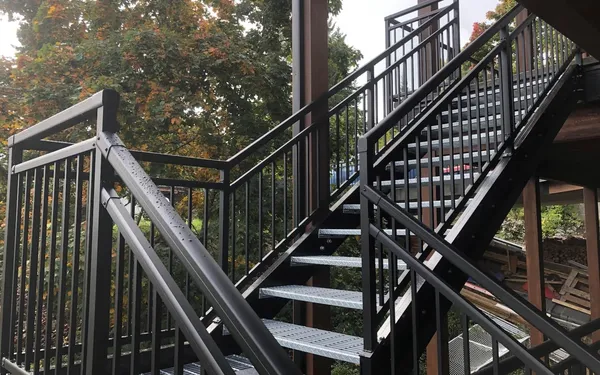
[INSERT IMAGE HERE: Aluminum railing on an elevated deck showing the perimeter exposure. Use any elevated project photo showing how the railing is the most exposed element.]
Here's what we see on projects: a homeowner invests in Class A composite decking, steel framing, and non-combustible siding, then puts wood railing on top of it. That wood railing is the most exposed element on the entire deck. It's vertical, it's at the perimeter, and it's the first thing wind-driven embers contact. It's also directly adjacent to the house wall in many configurations.
We're not in the business of scaring people into buying our product. But the physics are simple: a wood railing on a fire-resistant deck is the weak link. It's the path that embers use to reach the house. Replacing wood railing with aluminum or aluminum-framed glass eliminates that path entirely.
If your existing deck has wood railing and you're not ready to replace the whole deck, replacing just the railing with aluminum is one of the highest-impact fire hardening steps you can take. The deck boards matter, but the railing, sitting at the edge, fully exposed, matters just as much.
Preparing your deck for fire season
Whether your deck is brand new or twenty years old, these steps reduce fire risk heading into summer:
Clear all debris from the deck surface, gaps between boards, and especially from under the deck. Dry leaves and pine needles in the gaps between decking boards are the number one ignition risk on any deck, regardless of material.
Move firewood, propane tanks, and stored combustibles at least 30 feet from the deck and house. If you can't move them that far, get them as far as possible and consider a non-combustible barrier.
Trim vegetation within 10 feet of the deck. Cut back any tree branches that overhang the deck or railing. Replace bark mulch near the deck with gravel or rock.
Inspect your railing connections. Loose posts or damaged connections are a structural risk in any scenario, but in a fire event, a compromised railing system can't serve as a barrier. Make sure all fasteners, base plates, and brackets are tight and intact.
Check your local building code for any fire-related requirements that may have been adopted since your deck was built. Many municipalities have updated their fire construction standards in recent years, particularly in BC and the western US. Your existing deck may be grandfathered in, but if you're planning any modifications, the new standards apply.
In a WUI zone and considering a railing upgrade? Our dealer network across BC, Washington, and the western US can advise on the best system for your specific fire zone. Contact us for a consultation.
Frequently asked questions
What kind of decking is fireproof?
No typical decking board is truly fireproof. Concrete, tile, and aluminum plank decking are non-combustible: they won't burn. Premium PVC composite decking with a Class A flame spread rating is ignition-resistant but not non-combustible. Wood and standard composite are combustible. For railing specifically, aluminum and glass are both non-combustible.
Does aluminum burn?
No. Aluminum is non-combustible. It melts at approximately 660 degrees Celsius (1,220 degrees Fahrenheit) but doesn't ignite, produce flame, or contribute fuel to a fire. Wind-blown embers landing on aluminum railing do nothing. This is why aluminum railing automatically meets WUI and fire-zone building code requirements without any special fire rating.
Is aluminum railing fire resistant?
Aluminum goes beyond fire-resistant. It's classified as non-combustible under both the National Building Code of Canada and the International Building Code. Non-combustible is the highest fire safety classification for a building material. Our systems are made from 6005-T61 and 6063-T6 aluminum alloys, both of which are non-combustible.
Is composite decking fire resistant?
It depends on the specific product. Premium PVC composites with a Class A flame spread rating are ignition-resistant and some are WUI-compliant. Standard capped composites (Class B or C) offer less protection. All composites are combustible to some degree. They melt and can burn under sustained flame. Non-combustible materials like aluminum and concrete are the only truly fireproof options.
What is a WUI zone and does it affect my deck?
WUI (Wildland-Urban Interface) zones are areas where developed properties meet wildland vegetation. If you're in a WUI zone, your local building code likely requires ignition-resistant or non-combustible materials for exterior construction including decks and railing. BC, California, and Colorado all have specific WUI construction requirements. Aluminum railing is automatically compliant as a non-combustible material.
Is glass railing better than picket railing in fire zones?
From a fire safety perspective, yes. Both aluminum picket and aluminum-framed glass railing are non-combustible. But glass panels create a solid barrier that blocks ember passage, while picket railing has gaps that embers can fly through. On elevated decks in forested or brush-covered areas, glass railing provides measurable additional protection against wind-driven embers reaching the house.