Glass railing for balconies, condos, and multi-family buildings. Height, laminated glass requirements, strata approval, concrete mounting, and what building-wide replacement projects actually involve.
This article is part of our complete Glass Deck Railing guide.
If you have a balcony, not a deck, most railing content on the internet doesn't speak to you. Deck railing articles talk about wood framing, surface-mount base plates, and DIY weekends. Balcony railing is a different project entirely. You're mounting into concrete or steel, dealing with higher elevation code requirements, working around strata or condo board approvals, and often prioritizing privacy and wind protection over open views.
This guide is specifically for balcony railing. Whether you're replacing aging iron or wood railing on a condo, upgrading a townhouse balcony, or specifying glass for a new multi-family build, here's what's different about balcony projects and what you need to know before starting.
We've supplied balcony railing for projects ranging from single-unit townhouse upgrades to the Metropolis towers in Newark, New Jersey, where we supplied glass railing with tinted panels across two multi-storey buildings. Balcony projects are a growing part of our business, and the challenges are consistent regardless of the building size.
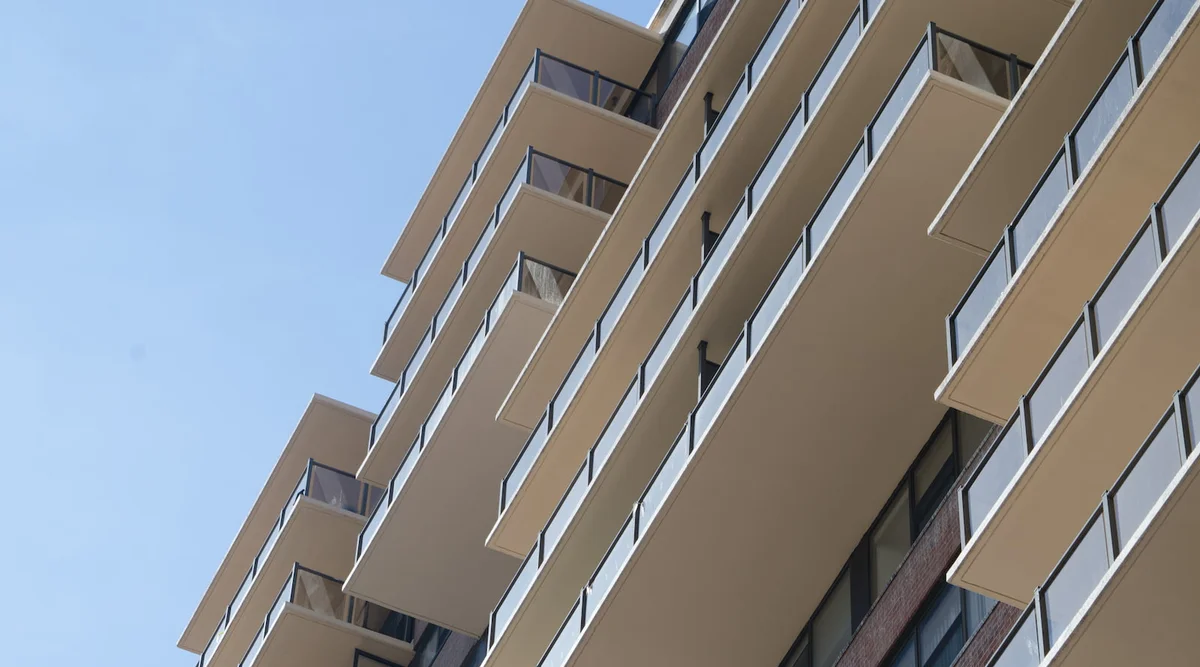
Why balcony railing is different from deck railing
The core product is the same: aluminum posts, tempered glass panels, powder coated finish. But everything about the installation context is different.
Structure. Decks are built on wood framing. Balconies are typically concrete slabs cantilevered from the building structure, or steel-framed platforms. The mounting method has to match the substrate: mechanical anchors into concrete, through-bolts into steel. You can't use the same wood-rated fasteners that work on a deck.
Elevation. Most balconies are above the first storey, which means the code requirements are stricter. In Canada, guards on balconies above 1.8 m require 42-inch minimum height. There's no "36-inch option" for a third-floor balcony the way there might be for a ground-level deck. The engineering loads may also be higher depending on the building's wind exposure classification.
Access. On a deck at ground level, you carry materials across the yard. On a balcony, you're lifting glass panels through hallways, up elevators, or hoisting from below. This affects logistics, labour cost, and the installation approach. Some installers require crane or hoist access for upper-floor balconies.
Ownership. If you own a house with a deck, you decide everything. If you own a condo with a balcony, the railing is almost always common property. The strata council or condo board has to approve any changes, and the design may need to match the building's existing aesthetic.
Can you use aluminum picket railing on a balcony?
Yes. Aluminum picket railing is code-compliant on balconies. It meets the same height, load, and opening requirements as glass. It mounts into concrete the same way. It costs less per linear foot. And it works perfectly fine as a safety barrier.
But on a balcony, the limitations of picket become obvious in ways they don't on a ground-level deck.
No wind protection. Picket railing has gaps between every picket. Wind passes straight through. On an elevated balcony, that wind is stronger and more constant than at ground level. A balcony with picket railing on a windy day is uncomfortable to use. Glass panels block the wind entirely, which is why glass railing makes a balcony usable on days when picket wouldn't.
No privacy. Picket railing is transparent from every angle. On a ground-level deck with 50 feet of yard between you and the neighbours, that's fine. On a balcony 15 feet from the next building, you're visible to everyone. Glass, especially frosted or tinted, gives you light without visibility.
No ember protection. In fire-prone regions, the gaps in picket railing allow wind-driven embers to pass through onto the balcony. Glass is a solid barrier against embers.
Visual weight. A row of vertical pickets on a small balcony makes the space feel enclosed. Glass opens it up visually, making the balcony feel larger than it is. On a 4-foot-deep condo balcony, this difference is dramatic.
Picket railing on a balcony isn't wrong. It passes code, it's durable, and it costs less. But glass solves problems on balconies that picket simply can't: wind, privacy, and visual space. That's why the vast majority of balcony projects we supply are glass, and it's why glass is the default specification on new multi-family construction.
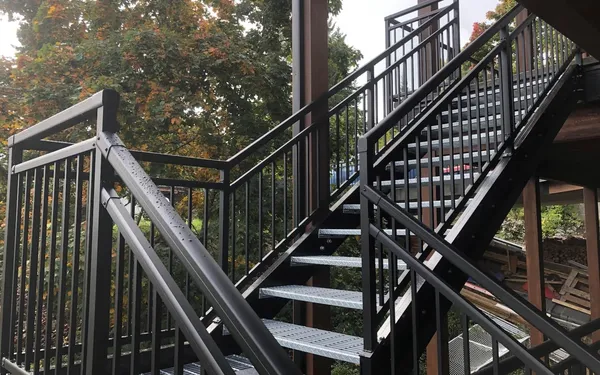
The Gibsons, BC multi-family project installed by Sun Pro Enterprises used aluminum picket railing across the building, and it works well for that application. But that building is on the Sunshine Coast at lower elevation with a different wind and privacy profile than a downtown highrise. Context drives the choice.
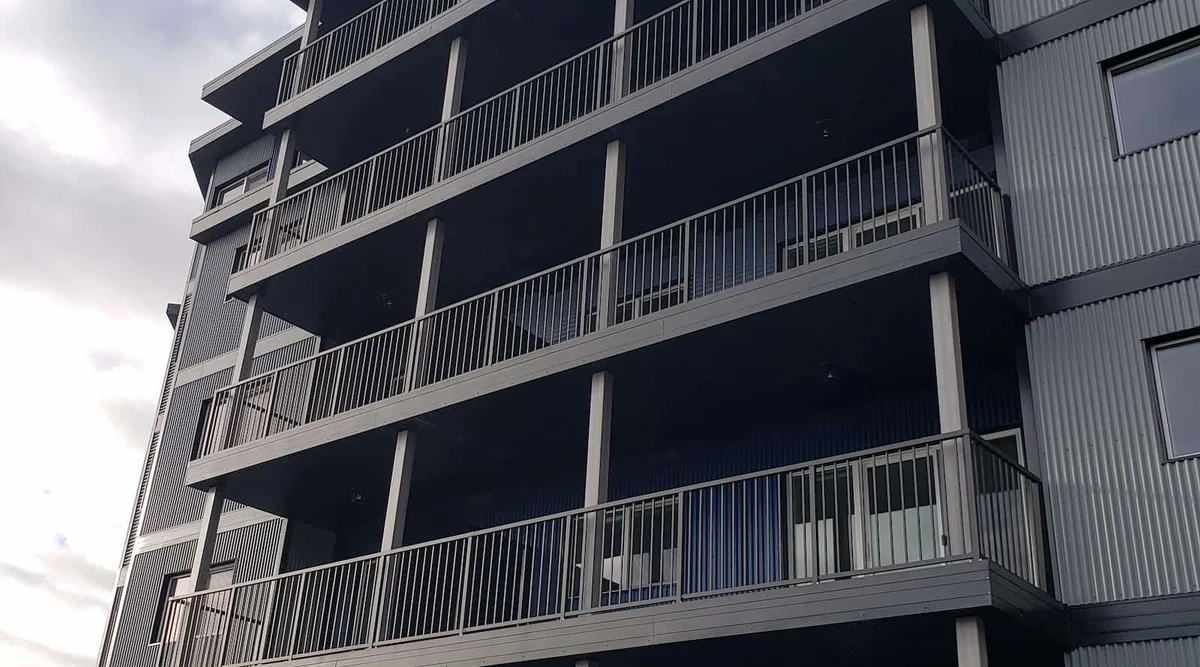
Mounting glass railing into concrete and steel
This is the biggest technical difference between deck and balcony railing installation. Wood framing accepts self-drilling screws directly. Concrete and steel do not.
Concrete slab mounting is the most common balcony application. Posts are fascia-mounted to the edge of the concrete slab using mechanical anchors, typically wedge anchors or sleeve anchors rated for the concrete strength and the required guard loads. The anchor pattern, embedment depth, and edge distance all matter for structural performance. This is not a DIY-friendly mounting method. Improperly anchored posts can fail under load, and drilling into a cantilevered concrete slab requires knowledge of the rebar location to avoid cutting structural reinforcement.
Steel structure mounting requires through-bolts or welded connections depending on the steel profile. Some multi-family buildings have steel balcony frames designed with mounting provisions for railing posts. In those cases, the connection is straightforward. Older buildings may require a structural assessment to confirm the steel can carry the additional railing loads.
Surface mount vs fascia mount. On balconies, fascia mounting (to the edge of the slab) is strongly preferred. It keeps the full balcony floor area usable, creates a cleaner look, and the concrete slab edge is typically the strongest mounting surface. Surface mounting onto the balcony floor is possible but uses floor space on an already small surface and can interfere with waterproofing membranes.
The Metropolis project in Newark, NJ used 2.5-inch surface mount posts with tinted glass panels across both towers. The base plates were mounted directly to the concrete balcony slabs, with each connection engineered for the specific wind loads at that elevation. That's the kind of commercial balcony project where our engineering team (JCJ Design Engineering) provides project-specific documentation and our dealer coordinates the installation across multiple floors and units.
Professional installation is not optional for balcony railing. The structural connection between the posts and the building is safety-critical.
Code requirements for balcony railing
Height: In Canada, any guard on a balcony above 1.8 m requires a minimum of 1,070 mm (42 inches). In the US, the IBC requires 42 inches for commercial and multi-family guards. Even residential balconies above a certain height typically fall under the 42-inch requirement. There is no 36-inch option for an elevated balcony.
Load: Guard load requirements are the same as deck railing: 0.50 kN/m horizontal in Canada, 200 lbs concentrated in the US. But on a high-rise balcony with significant wind exposure, the actual wind load on the glass panels may exceed the minimum guard load. The system needs to be engineered for the specific building and location.
Glass specification: Tempered or laminated safety glass. Some municipalities require laminated glass on balconies above a certain height as an additional safety measure, since a broken tempered panel at height could drop glass fragments to the ground below. Laminated glass cracks but stays in place. This adds 30 to 50% to the glass panel cost but provides a critical safety advantage on elevated installations. For the full glass specification breakdown: Glass Railing Panels.
Openings: The 4-inch (100 mm) sphere rule applies to all guards, including balconies. Glass panels inherently meet this. There are no openings for a sphere to pass through.
Privacy: the #1 reason people choose glass for balconies
On a deck, people choose glass for the view. On a balcony, people choose glass for the privacy, without losing light.
Balconies face other balconies. They face streets. They face neighbours who are 15 feet away, not 100. The old iron railing that was there before let everyone see everything. A solid wall would block the light and make the balcony feel like a cage. Glass is the middle ground: it blocks the sightline while keeping the space bright and open.
Frosted glass (acid-etched) is the most popular privacy option for balconies. It transmits light but diffuses it, making it impossible to see clearly through the panel. You get brightness without visibility. It also shows fingerprints and dirt less than clear glass, which is a practical advantage on a high-touch surface like a balcony railing.
Tinted glass in grey, bronze, or green provides partial privacy. People can still see shapes and movement through tinted glass, but detail is reduced. The Metropolis towers in Newark use tinted glass panels, which complement the building's contemporary architecture while providing partial privacy for the residents. Tinted glass also reduces glare on south-facing and west-facing balconies.
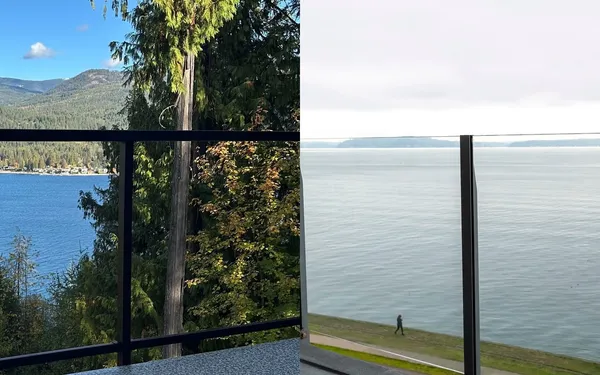
Clear glass is the right choice when the view is the priority and privacy isn't a concern. Upper-floor units facing open sky or water, for example. On lower floors or in dense urban areas, most homeowners and property managers opt for frosted or tinted.
Mixed configurations work well on corner balconies or L-shaped layouts. Clear glass on the view side, frosted on the side facing neighbours. Same posts, same top rail, same colour. Different glass where it matters.
Wind protection on exposed balconies
Balconies are almost always more wind-exposed than decks. They're elevated, they protrude from the building envelope, and they have no surrounding landscape to break the wind. On a windy day, an open balcony with iron or picket railing is unusable.
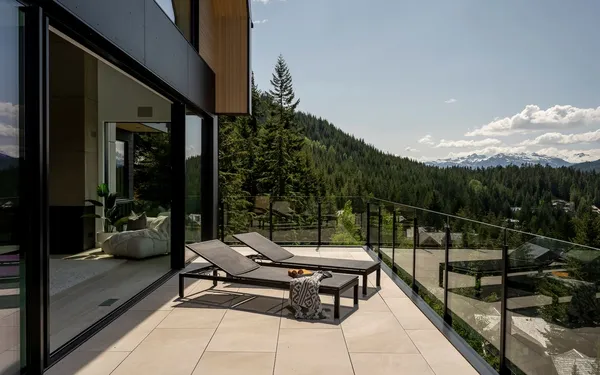
Glass railing changes this. The solid glass panels create a windbreak that makes the balcony comfortable in conditions where an open railing wouldn't. This is one of the biggest practical upgrades when replacing old iron or wood balcony railing with glass. The space becomes usable on more days of the year.
For balconies with extreme wind exposure (upper floors of high-rises, coastal buildings, exposed corners), our Double Glass Mid Rail System extends the glass barrier higher than a standard railing, creating a more effective wind wall while maintaining transparency. This system is specifically designed for wind wall and privacy applications.
The engineering consideration: glass panels on exposed balconies catch significant wind load. The system needs to be engineered for the specific building's wind exposure: height, location, orientation, and local wind speed data all factor in. Our engineering team can advise on post spacing, glass thickness, and anchor requirements for high-wind balcony installations.
Replacing old balcony railing with glass
The most common balcony railing project isn't new construction. It's replacing aging iron, steel, or wood railing on an existing building.
Structural assessment. Before anything else, confirm that the existing balcony structure can support the new railing. Glass railing systems aren't significantly heavier than iron, but the mounting method is different. If the old railing was embedded in the concrete during the original pour, the new system needs a different connection method, typically mechanical anchors into the existing slab edge. A structural engineer may need to sign off, especially on multi-family buildings.
Removal of old railing. Iron and steel railing embedded in concrete has to be cut at the slab edge or extracted. This can damage the waterproofing membrane on the balcony, which means the membrane may need to be patched or replaced at the railing connection points. Plan for this. It adds cost and time but is critical for preventing water intrusion.
Waterproofing coordination. This is the step that gets missed most often on balcony retrofit projects. The new post anchors penetrate the slab, and every penetration is a potential water path. The installer needs to coordinate with a waterproofing contractor to ensure the membrane is intact at every anchor location. Skipping this step leads to leaks into the unit below, the most common complaint after balcony railing replacement.
Colour and design matching. On multi-family buildings, the new railing needs to match or complement adjacent units. This is usually specified by the strata council or property manager. Our powder coating line offers 14 standard colours with Tiger Drylac and AkzoNobel powder, and custom colour matching is available for buildings that need an exact match to an existing colour scheme.
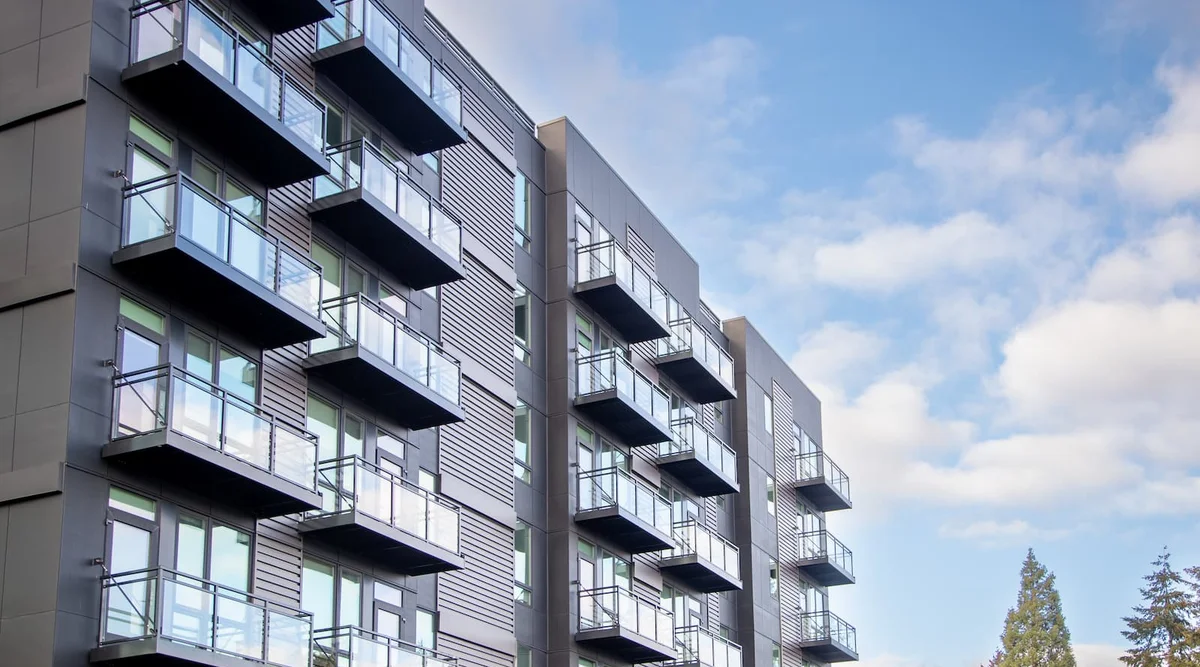
Condo and strata considerations
If your balcony is part of a condo or townhouse complex, the railing project has a layer of process that single-family homes don't.
Common property rules. In most strata and condo structures, the balcony railing is common property, even though the balcony is your exclusive-use space. This means you can't unilaterally replace it. You need approval from the strata council or condo board, and the replacement has to comply with any design guidelines the building has in place.
What you'll typically need to submit: the proposed system and manufacturer, colour selection, glass type (clear, frosted, or tinted), mounting method, engineering documentation confirming code compliance, and the name of the installer. Some buildings require the installer to carry specific insurance and provide a warranty that covers the common property elements.
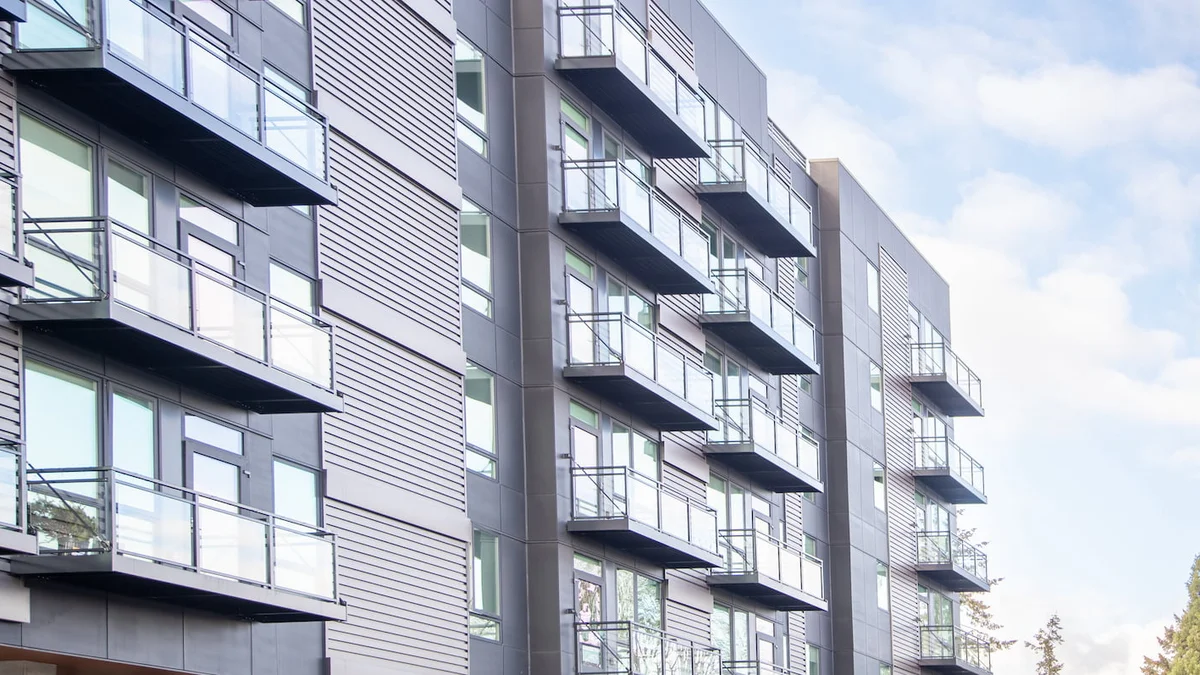
Building-wide replacement projects. The most cost-effective approach for a multi-family building is to replace all balcony railing at once. Bulk pricing from the manufacturer, one mobilization for the installer, and consistent appearance across the building. If you're on a strata council considering this, our dealer network handles multi-unit projects and can provide building-wide quotes through your property manager. The Metropolis project was exactly this: two full towers supplied with matching glass railing systems.
The approval process takes time. Between the strata meeting cycle, design review, quote collection, and board vote, expect 2 to 6 months from initial inquiry to approval. Start the process well before you want the work done, especially if you're trying to complete the project during a specific season.
How much does glass balcony railing cost?
Glass balcony railing costs more per linear foot than the same system on a ground-level deck. The premium comes from three factors: concrete mounting hardware and labour, access logistics at height, and the potential requirement for laminated glass.
Industry ranges for balcony railing installed:
Glass component (framed) runs $100 to $180 per linear foot on balconies, compared to $80 to $150 on a standard deck. The premium covers concrete anchoring and the access complexity.
Frameless (topless) glass runs $150 to $250+ per linear foot on balconies. Precision post alignment on a concrete slab at height is more demanding than on a wood deck at ground level.
If laminated glass is required (increasingly common on elevated installations), add 30 to 50% to the glass panel cost.
For building-wide replacement projects, per-unit costs typically come down significantly because of bulk pricing on materials and a single mobilization for the installation crew. A building replacing railing on 50 balconies will pay less per linear foot than a single-unit replacement.
Full pricing breakdown across all systems: Aluminum Deck Railing Costs in 2026
Frameless vs framed glass for balconies
Both work on balconies, but the choice depends on the building context.
Glass Component (framed) is the most common choice for balcony projects. The top rail adds structural rigidity that's valuable on an exposed, elevated surface. It's easier to install on concrete, handles corners and angles well, and the top rail profile can serve as a functional handrail. For multi-family buildings replacing railing across many units, framed glass is the practical choice. It installs faster and costs less per unit.
Infinity Topless (frameless) is stunning on balconies where the view is premium: penthouse units, waterfront condos, upper floors with panoramic sightlines. The lack of a top rail gives the balcony an open, floating quality that framed glass can't match. The trade-off is cost and installation precision, both of which are higher for frameless. On a concrete balcony at height, those factors are magnified.
Full comparison: Frameless vs Framed Glass Railing
Planning a balcony railing project? Whether it's a single-unit upgrade or a building-wide replacement, our dealer network handles balcony projects across Canada and the US. We can advise on mounting method, glass type, wind engineering, and colour matching for your building. Contact us for a consultation.
Frequently asked questions
Can you put glass railing on a balcony?
Yes. Glass railing is one of the most popular choices for balconies. It provides a code-compliant safety barrier while preserving views, blocking wind, and allowing natural light. Available in framed and frameless configurations, with frosted or tinted glass for privacy.
Can you use picket railing on a balcony?
Yes, aluminum picket railing is code-compliant on balconies. But it doesn't block wind, doesn't provide privacy, and makes small balconies feel enclosed. Glass is preferred on most balcony projects because it solves all three of those problems while still meeting the same structural code requirements.
How is glass balcony railing mounted?
Typically fascia-mounted to the edge of the concrete slab using mechanical anchors rated for the substrate and guard loads. Surface mounting onto the balcony floor is possible but less common. Mounting into concrete requires knowledge of rebar location and proper anchor selection. Professional installation is required.
What is the code height for balcony railing?
In Canada, balcony guards above 1.8 m require 1,070 mm (42 inches) minimum. In the US, the IBC requires 42 inches for commercial and multi-family balconies. There is no 36-inch option for an elevated balcony.
How much does glass balcony railing cost?
Glass component (framed) runs $100 to $180 per linear foot on balconies. Frameless runs $150 to $250+ per foot. The premium over deck railing covers concrete mounting, access logistics at height, and potentially laminated glass. Building-wide replacement projects have lower per-unit costs due to bulk pricing and single mobilization.
Do I need strata or condo board approval to replace balcony railing?
In most cases, yes. Balcony railing on condos and townhouses is usually common property. You'll need to submit the proposed system, colour, glass type, mounting method, and engineering documentation for approval. Building-wide replacements are the most cost-effective approach. Allow 2 to 6 months for the approval process.