
Glass deck railing is a guardrail system that uses tempered glass panels as the primary infill — held in place by aluminum posts and (in framed systems) a top rail. It’s the railing you choose when the view matters more than anything else. The glass provides a nearly transparent barrier that preserves sightlines while meeting full building code requirements for safety, height, and load resistance.
We manufacture two glass railing systems at our facility in Aldergrove, BC: the Glass Component system (framed, with a top rail) and the Infinity Topless system (frameless, no top rail). Both are engineered in-house, finished on our AAMA 2604 powder coating line, and backed by a 20-year structural warranty. This guide covers everything you need to know before buying glass deck railing — from cost and code to installation and maintenance.
In this guide
1. What is glass deck railing?
2. Frameless vs framed glass railing
3. How much does glass deck railing cost?
4. Types of glass used in railing
5. Building code for glass railing
What is glass deck railing?
Glass deck railing is a guardrail system where tempered glass panels replace the traditional pickets or balusters between the posts. The glass provides the barrier — preventing falls and meeting code — while allowing nearly unobstructed visibility through the railing.
The aluminum posts and hardware do the structural work. The glass is the infill. In framed systems, a top rail runs along the top of the glass. In frameless systems, the glass stands on its own in post channels with no top rail at all.
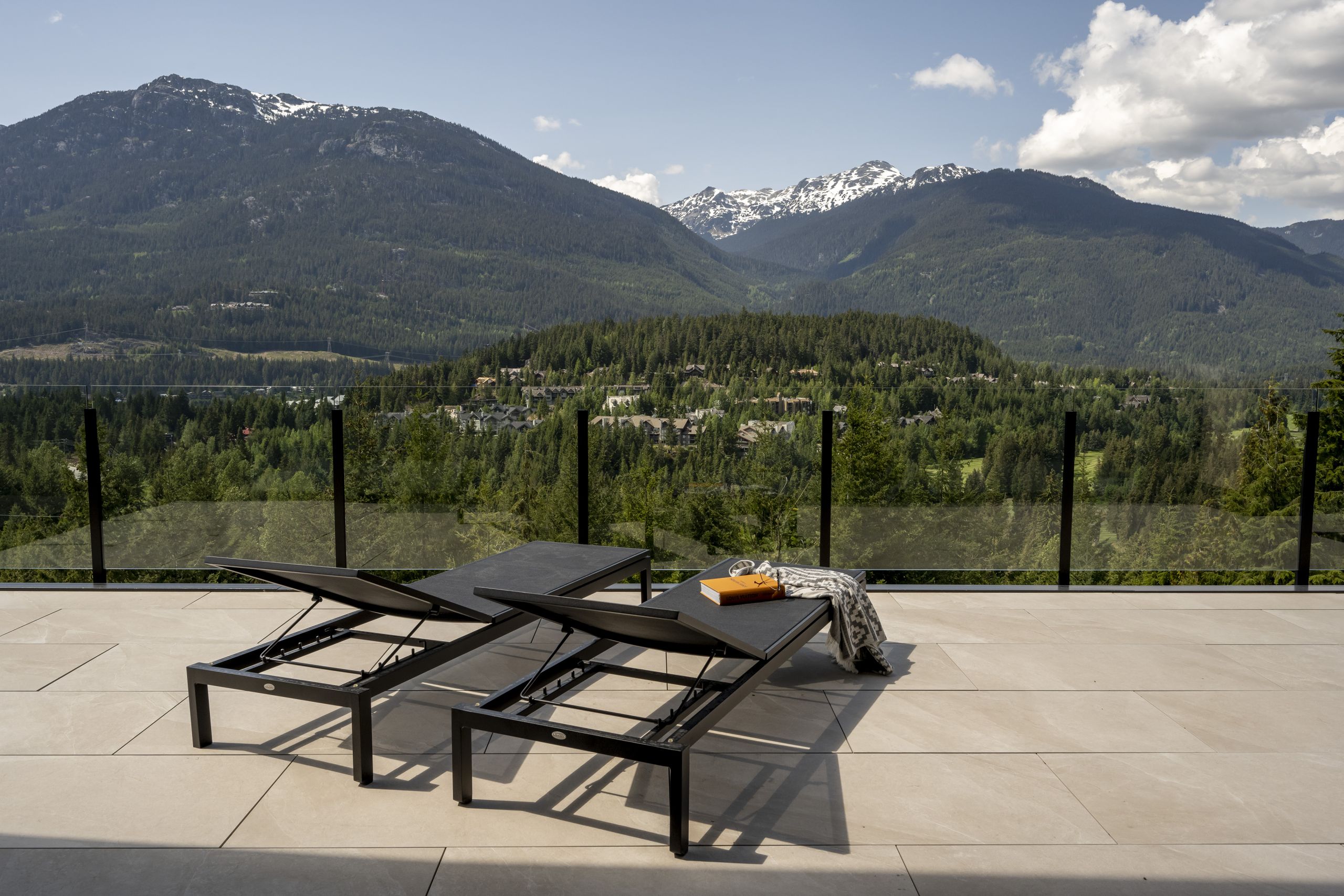
Glass deck railing is the go-to choice for waterfront properties, elevated decks with a view, rooftop terraces, and modern homes where the architecture calls for transparency and clean lines. It’s also one of the few railing types that doubles as a windbreak — the solid glass panels block wind while picket and cable systems don’t.
Glass railing isn’t new, but it’s become significantly more popular in residential applications over the past decade as manufacturing costs have come down and homeowners have seen it on commercial buildings, restaurants, and resorts. What used to be a commercial-only product is now one of the most requested residential railing styles in BC and across North America.
Frameless vs framed glass railing
This is the first decision you’ll make when choosing glass deck railing, and it affects everything — the look, the cost, the installation complexity, and the view.
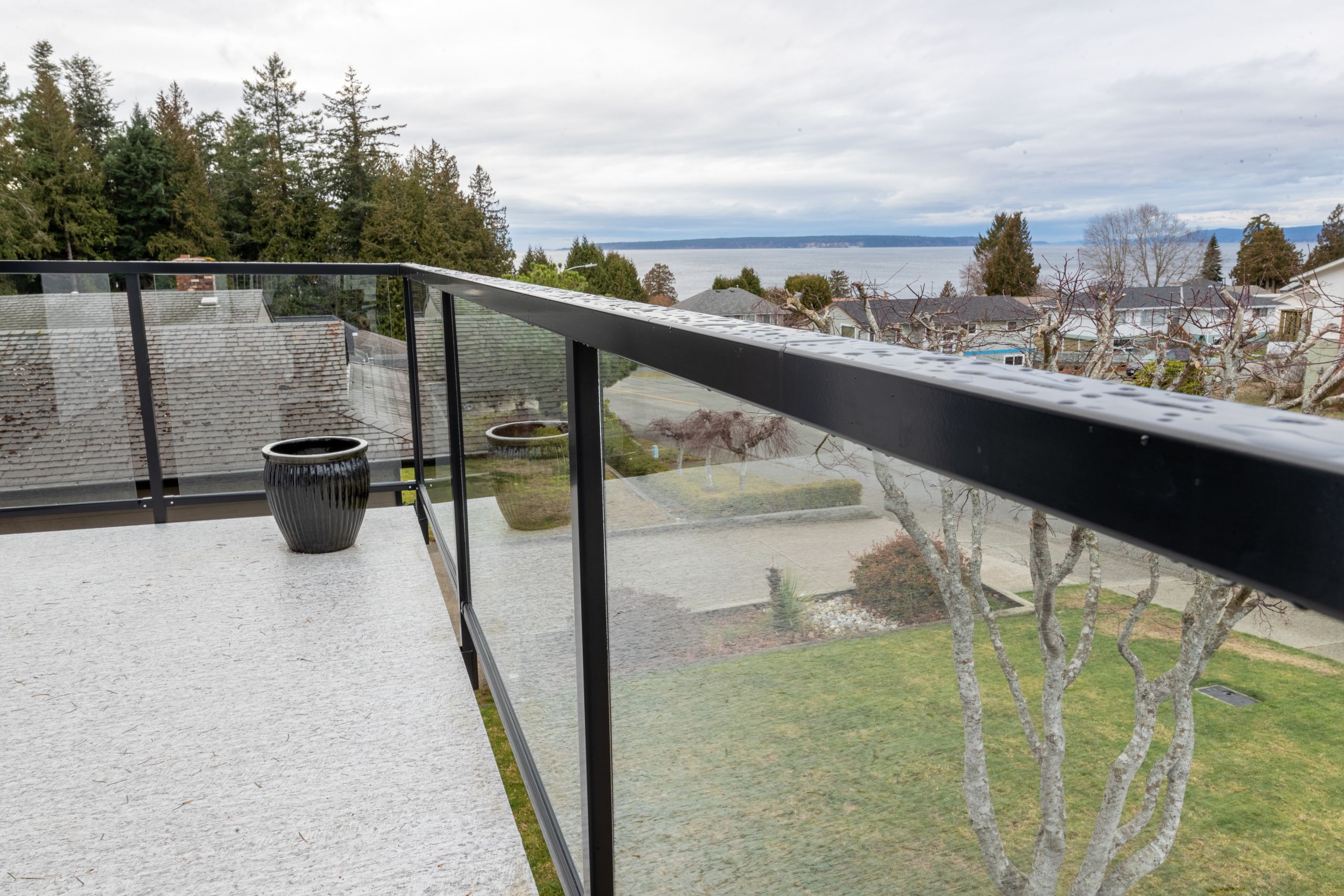
Glass component railing (framed) uses aluminum posts with a top rail connecting them, and tempered glass panels set between the posts in channels within the rail system. The frame gives the railing a finished, architectural look. You see the aluminum outline with glass in between. It’s the more affordable glass option, it’s easier to install, and the top rail adds structural rigidity that allows for wider post spacing.
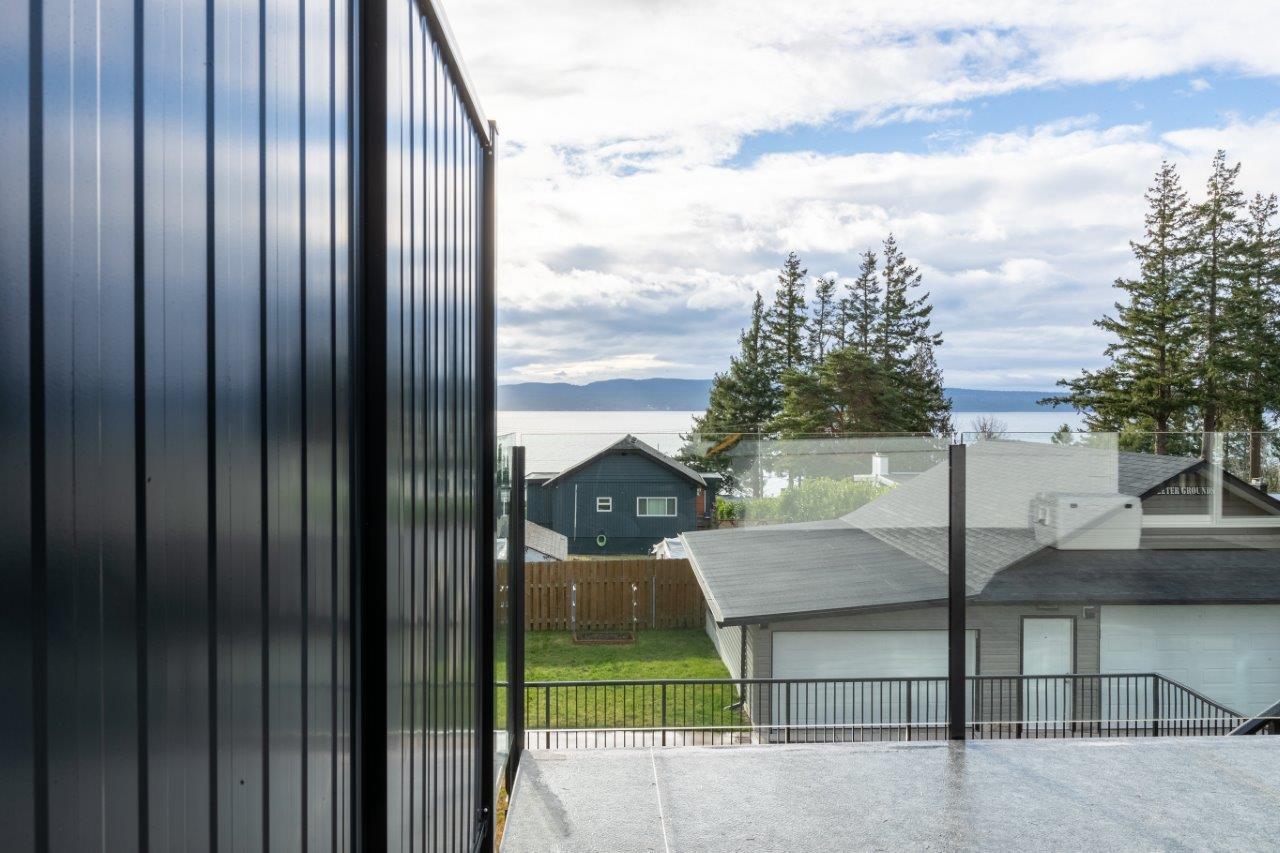
Infinity Topless (frameless) removes the top rail entirely. The glass panels sit in precision-machined channels in the aluminum posts and stand on their own. The effect is a nearly invisible barrier — you see the view, not the railing. It’s the premium option. The glass is typically thicker to compensate for the lack of a top rail, the post tolerances are tighter, and installation has to be more precise. But the result is the cleanest, most open sightline of any railing system available.
| Glass component (framed) | Infinity Topless (frameless) | |
|---|---|---|
| View clarity | Mostly open — frame visible | Fully open — nearly invisible |
| Industry cost range | $80 – $150/ft installed | $120 – $200+/ft installed |
| Installation complexity | Moderate — top rail adds forgiveness | High — post alignment must be exact |
| Glass thickness | Standard tempered | Thicker — compensates for no top rail |
| Best for | Views on a budget, structured modern look | Premium view properties, maximum transparency |
Both systems use the same AAMA 2604 powder coated aluminum posts and hardware. Both meet the same building codes. The difference is purely in the look, the cost, and the installation precision required.
How much does glass deck railing cost?
Glass deck railing is the premium option in the railing market, and the price reflects it. Industry-wide, expect:
Glass component (framed): $80 to $150 per linear foot installed. This is the more affordable glass option and the most popular for residential decks. The aluminum frame keeps costs lower than frameless while still delivering the transparency and modern look that glass provides.
Frameless topless glass: $120 to $200+ per linear foot installed. The thicker glass, tighter post tolerances, and more demanding installation all add cost. On premium view properties, the investment is typically justified by the result.
What drives the price up: taller panels, thicker glass, more corners and angles, stair sections (each panel has to be custom-cut to the stair pitch), and fascia mounting vs surface mounting. A simple straight run of glass component railing is at the low end. A multi-level deck with stairs, corners, and frameless glass is at the top.
For a detailed cost breakdown including labour vs materials: How Much Does Aluminum Deck Railing Cost?
Types of glass used in railing
Not all glass is the same, and the type used in your railing matters for safety, durability, and code compliance.
Tempered glass is the standard for deck railing. It’s heat-treated to be 4–5 times stronger than regular annealed glass. If it ever does break, it shatters into small, granular pieces rather than long, dangerous shards. This is the same safety principle used in car side windows and shower doors. In Canada, the glass must conform to CAN/CGSB-12.1-M.
Laminated glass consists of two layers of glass bonded with a plastic interlayer (usually PVB). If one layer breaks, the interlayer holds the pieces in place — the panel cracks but doesn’t collapse. Laminated glass is sometimes required by code for frameless systems or guards above certain heights. It’s more expensive than tempered but provides an extra level of failure protection.
Tinted glass adds a colour tint — grey, bronze, or green — to the glass for privacy or aesthetic reasons. It reduces transparency slightly but can complement specific architectural palettes. Tinted glass can be tempered or laminated.
Frosted glass provides privacy while still allowing light through. Useful for decks facing neighbours or streets where you want openness without full visibility. Frosted glass is common on balconies and urban rooftop decks.
Plexiglass / acrylic is sometimes used as a cheaper alternative to tempered glass. It’s lighter and less expensive, but it scratches easily, yellows with UV exposure, and doesn’t have the same impact resistance or longevity as tempered glass. We don’t recommend it for permanent residential installations.
Building code for glass railing
Glass railing has to meet the same building code requirements as any other guardrail — height, load resistance, and opening restrictions. But glass adds a few additional compliance considerations.
Glass specification: In Canada, the glass must be tempered or laminated safety glass conforming to CAN/CGSB-12.1-M. The US requires compliance with ASTM C1048 or equivalent. Regular window glass is not acceptable for guards.
Engineering documentation: Some municipalities — particularly for frameless systems on elevated decks — require an engineer’s stamp or a manufacturer’s engineering letter confirming the system meets guard load requirements. We provide this documentation for all our systems.
Height and load: Same rules as any guard. In Canada, 900 mm (36 inches) minimum on decks up to 1.8 m above grade, 1,070 mm (42 inches) above that. In the US, 36 inches minimum residential. Load requirements: 0.50 kN/m horizontal in Canada, 200 lbs concentrated in the US.
Climbability: Glass panels inherently meet climbability requirements because they don’t create footholds. This is one of the advantages glass has over horizontal cable or rod railing, which can be restricted as climbable in some jurisdictions.
Full building code details: Deck Railing Building Code Requirements
Glass railing installation
Glass railing installation is more demanding than picket railing. The tolerances are tighter, the panels are heavy, and mistakes are expensive to fix on site.
Post alignment is critical. With picket railing, posts can be slightly off and the rail sections still connect fine. With glass, the panels are rigid — if a post is out of alignment by even a few millimetres, the glass panel won’t seat properly in the channel. For frameless systems, this tolerance is even tighter.
Glass panels are heavy. A standard tempered glass panel for a deck railing section weighs 30–50 kg depending on height and thickness. Installation requires at least two people, and on elevated or hard-to-access decks, getting the panels into position safely requires planning.
Stair sections need custom glass. Each glass panel on a stair section has to be cut to the exact angle of the stair pitch. This is done at the glass supplier based on measurements from the installed posts. Measure wrong, and the panel doesn’t fit — so posts go in first, measurements are taken, glass is ordered, and a second installation visit installs the panels.
Professional installation is strongly recommended for both glass component and frameless systems. The cost of a misaligned post or a broken panel during installation is far more than the labour savings of DIY.
Is glass deck railing safe?
Yes. This is the most common concern people have about glass railing, and the answer is straightforward.
Glass deck railing uses tempered safety glass — not regular window glass. Tempered glass is heat-treated to be 4–5 times stronger than annealed glass. You can lean on it, push against it, bump into it. It’s designed to handle the load requirements that building codes specify for guards — which includes impact resistance.
If tempered glass ever does break (which is rare in normal use), it shatters into small, granular, roughly cube-shaped pieces rather than the long, sharp shards that regular glass produces. The failure mode is designed to minimize injury risk.
A properly engineered glass railing system is tested as a complete guard — posts, hardware, channels, and glass — to meet building code load requirements. That means it’s been subjected to the same concentrated load, distributed load, and impact tests that any guardrail has to pass. When manufactured by an established company and installed correctly, glass railing is as safe as any other code-compliant guard.
The concern most people actually have isn’t safety — it’s the perception of safety. Glass feels less secure than a solid wall of pickets because you can see through it. That’s a psychological response, not an engineering one. The glass panel is holding the same load whether it’s transparent or not.
Cleaning and maintenance
Glass railing maintenance is simple but slightly more involved than aluminum picket, because the glass shows water spots, fingerprints, and dust more visibly.
Glass panels: Clean with a standard glass cleaner and a squeegee. A few times a year, or whenever they look spotted. Coastal installations may need more frequent cleaning because salt spray leaves visible residue. Avoid abrasive pads or scrapers — they scratch tempered glass permanently.
Aluminum frame: Same as any powder coated aluminum — mild soap and water. The AAMA 2604 finish holds for 20+ years. No painting, staining, or sealing required.
Gaskets and seals: The rubber gaskets that hold the glass in the channels should be inspected every few years. They’re the first components to show age — typically 15–20 years before they may need replacing. When they do, it’s a straightforward replacement without removing the glass.
Full cleaning instructions: Railing Care & Cleaning
Glass railing design ideas
Glass railing works across a wider range of architectural styles than most people expect. It’s not only for ultra-modern homes.
Modern / contemporary: Frameless glass is the natural fit. Clean lines, no visual clutter, maximum transparency. Black or dark bronze aluminum posts disappear against most facades.
West coast contemporary: Glass component railing with a square top rail in Coastal Grey or Sparrow Grey. The frame gives the railing just enough structure to feel intentional without competing with the view.
Traditional with a view: Glass component railing in White or Light Ivory. The aluminum frame reads as traditional trim while the glass keeps the sightline open. Works well on Cape Cod, lakeside, and cottage-style homes.
Privacy applications: Frosted or tinted glass panels for decks facing neighbours or streets. You keep the light and the modern look without full transparency.
Mixed infill: Glass on the view side, picket on the house side. Same colour, same posts, same top rail — different infill where it matters. This is the most common configuration our dealers install on residential decks with a view in one direction.
More design inspiration: Aluminum Deck Railing Design Ideas
Glass railing and wind
This is one of the most underappreciated advantages of glass deck railing. Glass panels create a solid barrier that blocks wind. Picket railing doesn’t. Cable railing doesn’t. On an elevated or exposed deck, the difference between a glass railing and an open railing is the difference between a usable outdoor space and one you avoid on breezy days.
If you’re building on a waterfront property, a hillside, a rooftop, or any elevated location with wind exposure, glass railing effectively turns your deck into a sheltered space without blocking the view. It’s one of the reasons glass is so popular in coastal BC — the views are spectacular, but the wind can be relentless.
The engineering consideration: glass panels catch more wind load than pickets. On highly exposed sites, the system needs to be engineered for the specific wind conditions. Our engineering team can advise on post spacing, glass thickness, and mounting requirements for wind-exposed installations.
Glass deck railing resources
These guides go deeper on topics covered in this page:
Powder coated aluminum railing
How the finish on your glass railing frame is made and why it matters
Height, spacing, load, and glass spec rules for Canada and US
Railing cost and pricing guide
Glass railing cost breakdown, labour vs materials, and how to get a quote
Glass railing styles, colours, and configurations for different home types
Which type of railing is best?
Glass vs picket vs cable — comparison by use case
Glass panel and aluminum frame lifespan and durability
Innovative Aluminum manufactures two glass railing systems — Glass Component (framed) and Infinity Topless (frameless). Both are designed, engineered, and powder coated in-house at our Aldergrove, BC facility. AAMA 2604 finish as standard. 20-year structural warranty. Contact us or find a dealer to get started.
Frequently asked questions
How much does glass deck railing cost?
Glass component (framed) railing runs $80–150 per linear foot installed. Frameless topless glass runs $120–200+ per linear foot. Price varies with glass thickness, panel height, post spacing, and project complexity. Corners and stairs add to the cost.
Is glass deck railing safe?
Yes. It uses tempered safety glass that’s 4–5 times stronger than regular glass. The system is engineered and tested as a complete guard to meet building code load and impact requirements. If tempered glass ever does break, it shatters into small granular pieces, not sharp shards.
What is the difference between frameless and framed glass railing?
Framed glass railing has aluminum posts and a top rail with glass panels between them. Frameless removes the top rail — the glass panels sit in post channels and stand on their own. Frameless provides a clearer view but costs more and requires more precise installation.
How do you clean glass deck railing?
Glass cleaner and a squeegee, a few times a year. The aluminum frame cleans with soap and water. Avoid abrasive pads on the glass. Coastal installations need more frequent cleaning to remove salt spray. That’s the entire routine.
Does glass railing block wind?
Yes — it’s one of the biggest practical advantages over picket or cable railing. Glass panels create a solid windbreak while maintaining full visibility. On elevated, coastal, or exposed decks, glass railing makes the space usable on days when an open railing system wouldn’t.