
This article is part of our complete Aluminum Deck Railing guide.
The railing is the most visible part of any deck. It frames the space, sets the tone, and — if you pick the wrong style — it’s the thing you notice every time you step outside. Aluminum gives you more design options than any other railing material: 14+ standard colors, four top rail profiles, picket or glass or cable infill, and surface or fascia mounting. The combinations are almost endless.
What follows are real design ideas based on systems we actually build and projects our dealers have actually installed. Not renders. Not Pinterest boards. Real railings on real decks.
Modern aluminum deck railing designs
Modern deck railing design comes down to one principle: less visual noise. The railing should protect without competing with the view or the architecture. That means thin profiles, dark or neutral colors, and infill that doesn’t chop up the sightline.
The three styles that work best for modern and contemporary homes:
Frameless glass — no top rail, minimal framing, maximum transparency. Our Infinity Topless system is built for this. The aluminum posts hold the glass panels in precision channels, and the result is a barrier you barely see. It’s the go-to for waterfront properties, rooftop decks, and any project where the view is the point.
Horizontal cable — thin stainless steel cables run horizontally between aluminum posts. The lines are clean, the view is mostly open, and the look is distinctly contemporary. This works particularly well on multi-level decks where the horizontal lines echo the deck planes.
Clean-profile aluminum picket — if the budget doesn’t stretch to glass or cable, a square picket system in black or dark bronze still reads modern when the profile is slim and the spacing is tight. It’s a cleaner, sharper alternative to traditional turned wood balusters.
The common thread: dark colors, square or flat top rail profiles, and no ornamental details. If it looks like it belongs on a Victorian porch, it doesn’t belong on a modern deck.
Black aluminum railing: why it’s the most popular choice
Black is our most requested color. It’s not close.
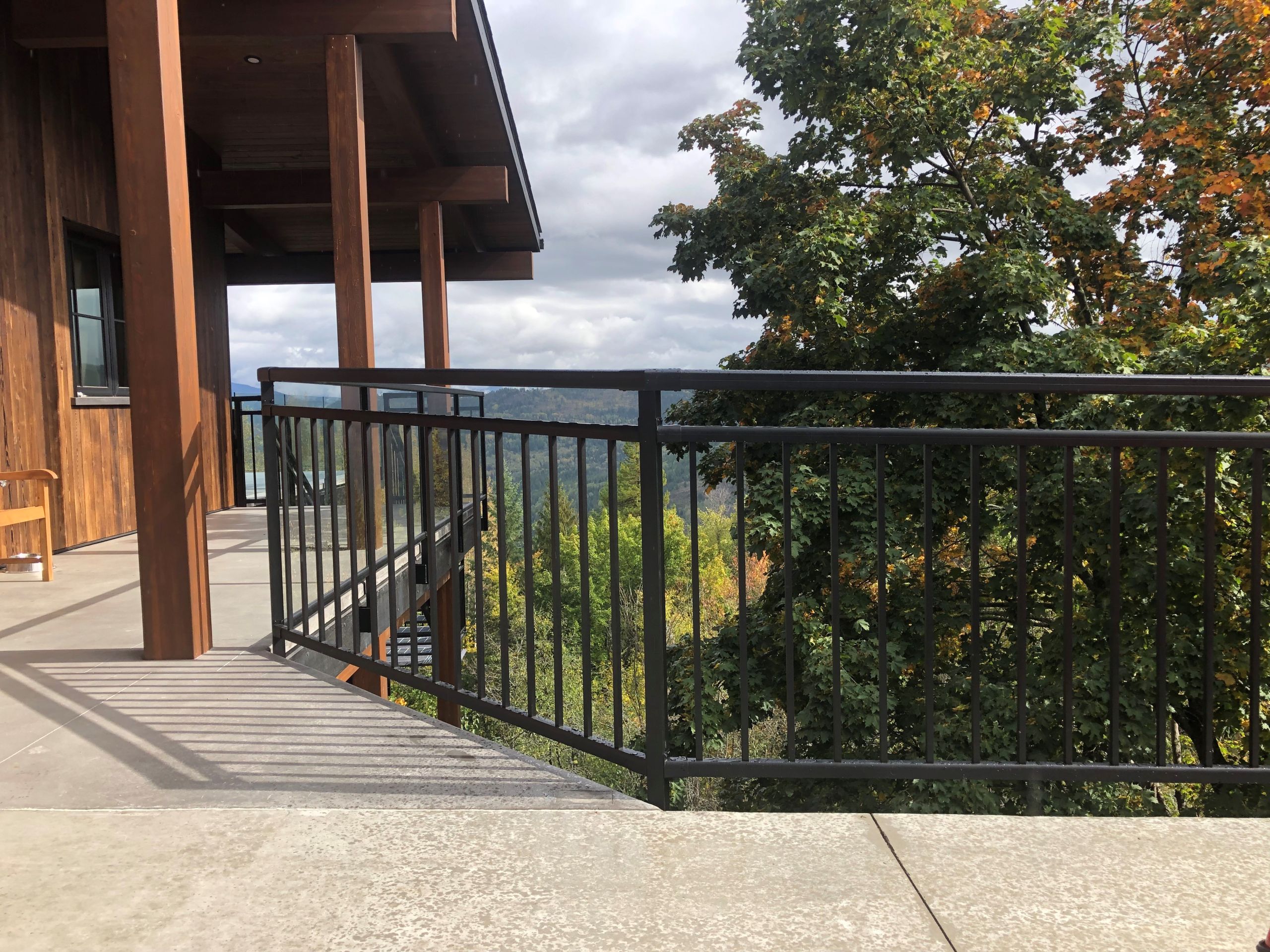
Black aluminum deck railing works with almost everything — light siding, dark siding, cedar decking, composite decking, stone, stucco, brick. It recedes visually, which means the railing does its job without dominating the space. On a deck with a view, a black railing frame around glass panels practically disappears.
We offer two blacks: smooth Black and Textured Black. Smooth black has a slight sheen — clean and polished. Textured black has a matte, slightly rough surface that hides fingerprints, scuffs, and dust better than the smooth finish. For decks that get a lot of traffic or hands-on-the-rail use, textured is the practical choice. For a sleek, high-end look, smooth black wins.
Both go through the same 5-stage pretreatment and AAMA 2604 powder coating process. Same durability. The difference is purely aesthetic.
White aluminum railing: clean and classic
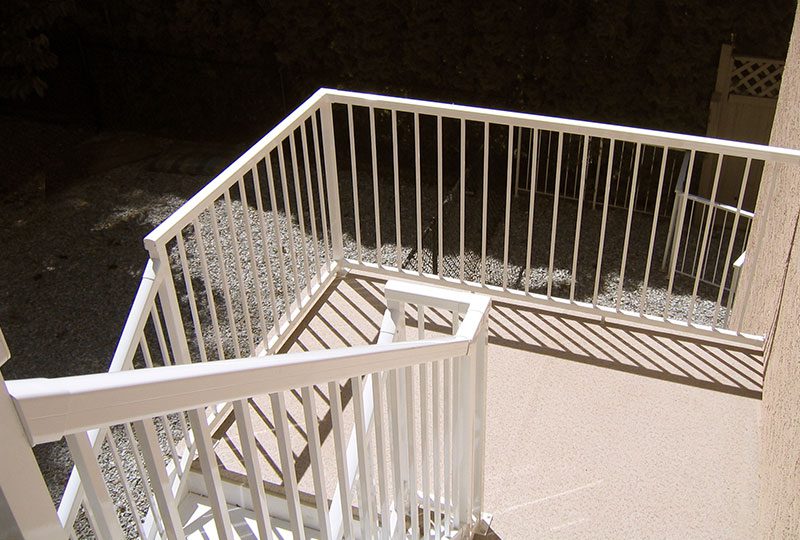
White aluminum railing has a completely different feel. Where black recedes, white pops. It’s bright, clean, and traditional — the look most people associate with a classic East Coast porch or a lakeside cottage deck.
White works best against darker backgrounds: dark grey siding, natural wood, dark composite decking, stone facades. It creates contrast and definition. On a white or light-sided house, white railing can blend in too much and lose its visual presence — that’s where Coastal Grey or Beige can be a better fit.
The one thing people worry about with white is maintenance. Fair question. White does show dirt more visibly than black. But because this is powder coated aluminum — not painted wood — there’s no yellowing, no flaking, no chalking. A garden hose knocks off anything that accumulates. It’s the same zero-maintenance finish in a brighter color.
Beyond black and white: colors that are gaining ground
Our 14 standard Innovative Series colors go well beyond the basics. The ones we’ve been coating more of lately:
Coastal Grey — a mid-tone grey that splits the difference between black and white. It’s neutral without being boring, and it works with nearly any home exterior. Coastal Grey has been our fastest-growing color over the past couple of years. Architects love it because it doesn’t fight with the rest of the palette.
Phantom Bronze — a warm, dark bronze with a slight metallic quality. It pairs well with natural wood, stone, and earth-toned homes. It reads as black from a distance but has more depth up close. A solid choice when pure black feels too stark.
Sparrow Grey — darker than Coastal Grey, lighter than black. It’s the “I want something dark but not black” option, and it works well on contemporary homes with mixed material facades.
Custom color matching is available for anything outside the standard 14. We’ve matched everything from specific RAL numbers for commercial projects to “the same grey as my window frames” for residential. Full color details: Powder Coating / Finishes.
Simple deck railing designs that actually work
You don’t need a complicated system to get a good-looking deck. Some of the best railing installations we’ve seen are the simplest: one color, one infill type, clean lines, done.
A few configurations that consistently look good:
Black picket, square top rail, surface mount. The most popular residential configuration. Works on any deck, any house, any budget. The square top rail gives it a modern edge that round or colonial profiles don’t.
Black frame with glass panels. One step up from picket. The glass opens up the view while the black aluminum frame provides structure and definition. This is the setup most of our BC dealers recommend for elevated decks.
Single color, mixed infill. Glass on the view side, picket on the house side. Same color, same top rail profile, same post style — just different infill where it matters. It saves money on the sides where you don’t need transparency and puts the investment where you’ll actually see it.
Simple doesn’t mean cheap. It means intentional. A well-executed simple design looks better than a complicated one that’s fighting with itself.
Horizontal and cable railing ideas
Horizontal railing — whether cable or rod — has a specific look that either works for you or doesn’t. The horizontal lines create a low, wide visual that emphasizes the width of the deck and draws the eye outward. On a property with a panoramic view, that’s exactly what you want.
Cable railing uses thin stainless steel cables tensioned between aluminum posts. The cables are nearly invisible from more than a few feet away, making it one of the most view-friendly options. The trade-off is that cables need periodic re-tensioning as temperatures change and materials settle. It’s not a lot of maintenance, but it’s not zero either.
Horizontal rod railing uses solid metal bars instead of cables. It’s a bolder look — the rods are more visible than cables, creating a stronger horizontal pattern. Some people prefer the visual weight; others find it too prominent.
One thing to be aware of: horizontal elements can create a climbing hazard for small children, since the rails act like a ladder. Some building codes restrict horizontal railing on guards above a certain height. Check your local code before committing to this style. Our building code guide covers the climbability rules.
Glass railing design ideas
Glass railing isn’t one look — it’s a spectrum from fully framed to fully frameless, and the design impact is very different depending on where you land on that spectrum.
Glass component (framed) — aluminum posts and a top rail with glass panels between them. You get transparency and openness, but with visible structure. It’s a good middle ground: more modern than picket, more affordable than frameless, and the frame gives it a finished, architectural look. This is our most popular glass system. See the full product: Glass Component Railings.
Infinity Topless (frameless) — no top rail. The glass panels sit in aluminum post channels and stand on their own. The effect is a nearly invisible barrier. It’s premium, it’s dramatic, and it only works when the installation is precise. This is our flagship system for view properties. See it: Infinity Topless Railings.
Privacy glass — frosted or tinted glass panels give you the openness of glass without full transparency. Useful for decks that face neighbours or streets where you want light but not sightlines.
Glass also doubles as a wind screen. On elevated or exposed decks, glass panels block wind while pickets don’t. If you’re building above a certain height or in a coastal area, glass railing makes the deck more usable in breezy conditions.
Deck stair railing ideas
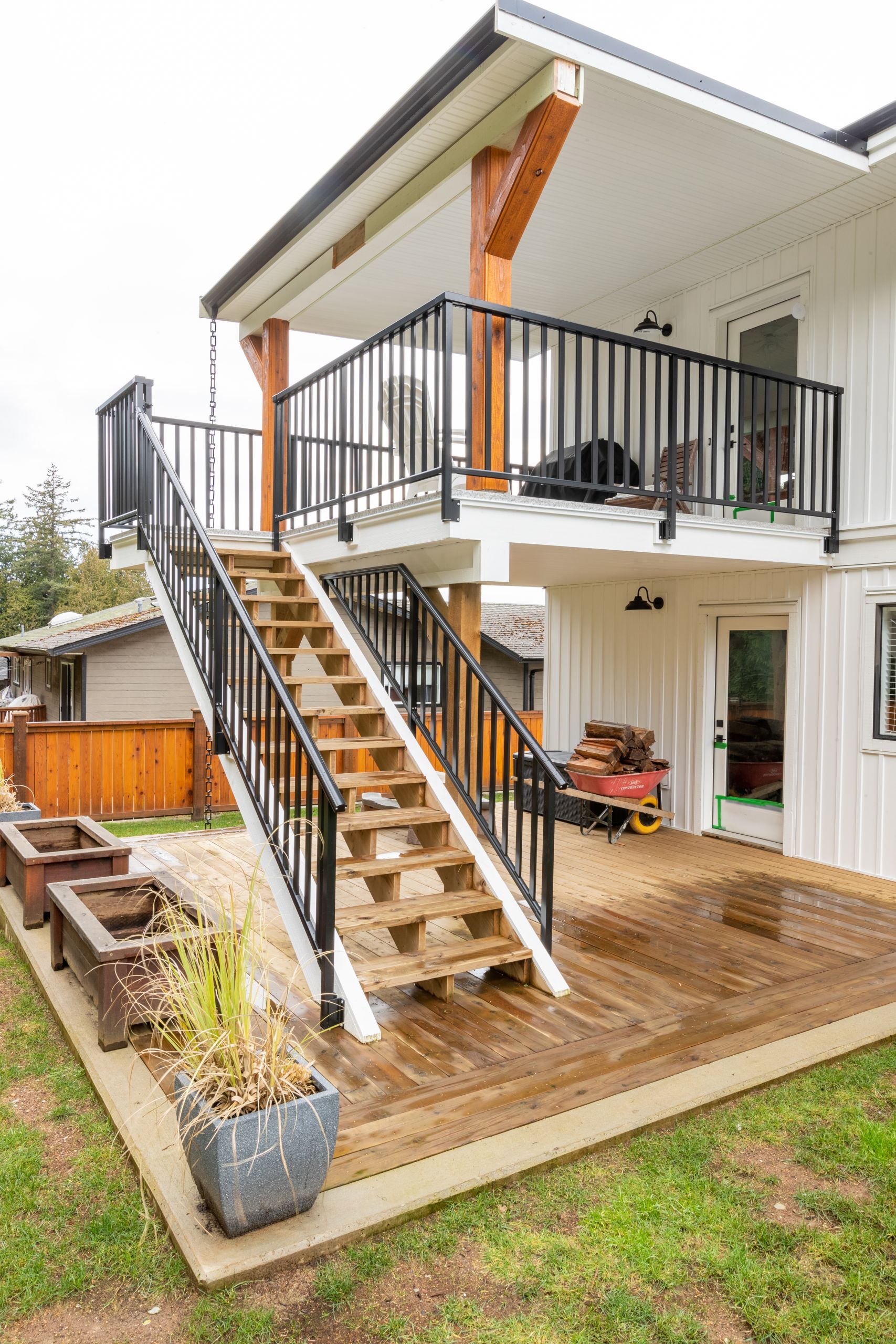
Stair railing is a separate design decision from the deck railing above it, and it’s where a lot of projects lose their consistency. The stair section should match the deck section — same color, same top rail profile, same infill type — or the transition looks awkward.
A few things to keep in mind for stair railing design:
Angle matters. Stair rail needs to follow the pitch of the stairs. Manufactured systems handle this with adjustable angle brackets or pre-cut stair configurations. Our systems include stair kits that adjust to match your stair pitch, so the top rail runs parallel to the stair nose without custom cutting.
Handrail height is different from guard height. Most codes require the stair handrail to be between 34 and 38 inches measured from the stair nosing. That’s different from the 36- or 42-inch guard height on the flat deck above. Don’t assume they’re the same.
Glass on stairs looks sharp but needs precision. Each glass panel has to be cut to the angle of the stair section. This is done at the glass supplier based on measurements from the installed posts. It’s not a DIY-friendly process, but the result — angled glass panels following the stairline — is worth it on the right project.
Deck railing lighting ideas
Lighting is the detail that separates a good deck from a great one after dark. And the railing is one of the best places to integrate it.
Post cap lights sit on top of each railing post and cast a soft downward glow. They’re the most common railing light and the easiest to install — usually solar or low-voltage LED. They provide ambient light without being bright enough to overpower the evening atmosphere.
Under-rail LED strips mount beneath the top rail and light the deck surface below. The light is hidden — you see the glow but not the source. It’s a more modern, integrated look than post caps.
Post-mounted step lights are recessed into the post face and aimed downward. They’re designed specifically for stair sections where you need visibility on the treads for safety.
The key with any deck railing lighting is restraint. One type of light, placed consistently, looks intentional. Three different types mixed together looks like a showroom. Pick one approach and commit to it.
Choosing colors and finishes for your deck railing
The safest approach to color selection: look at what’s already on the house and pick a railing color that complements it without matching it exactly.
Dark house exterior → Black or Textured Black railing blends in. White railing creates contrast. Phantom Bronze adds warmth.
Light house exterior → Black railing creates clean definition. Coastal Grey is subtle. White can disappear — use it deliberately or avoid it.
Natural wood or stone → Phantom Bronze, Rideau Brown, or Sparrow Grey. Warm tones complement natural materials better than pure black or white.
Mixed material modern → Black is almost always the right call. It’s the neutral of the railing world.
Our 14 standard colors are: White, Light Ivory, Sandalwood, Oyster Gray, Beige, Silver Matte, Coastal Grey, Hartford Green, Phantom Bronze, Rideau Brown, Sparrow Grey, Black, Textured Black, and Flat Black.
Every color goes through the same 5-stage pretreatment and AAMA 2604 powder coating process. No difference in durability between colors. Full swatches and custom color info: Powder Coating / Finishes.
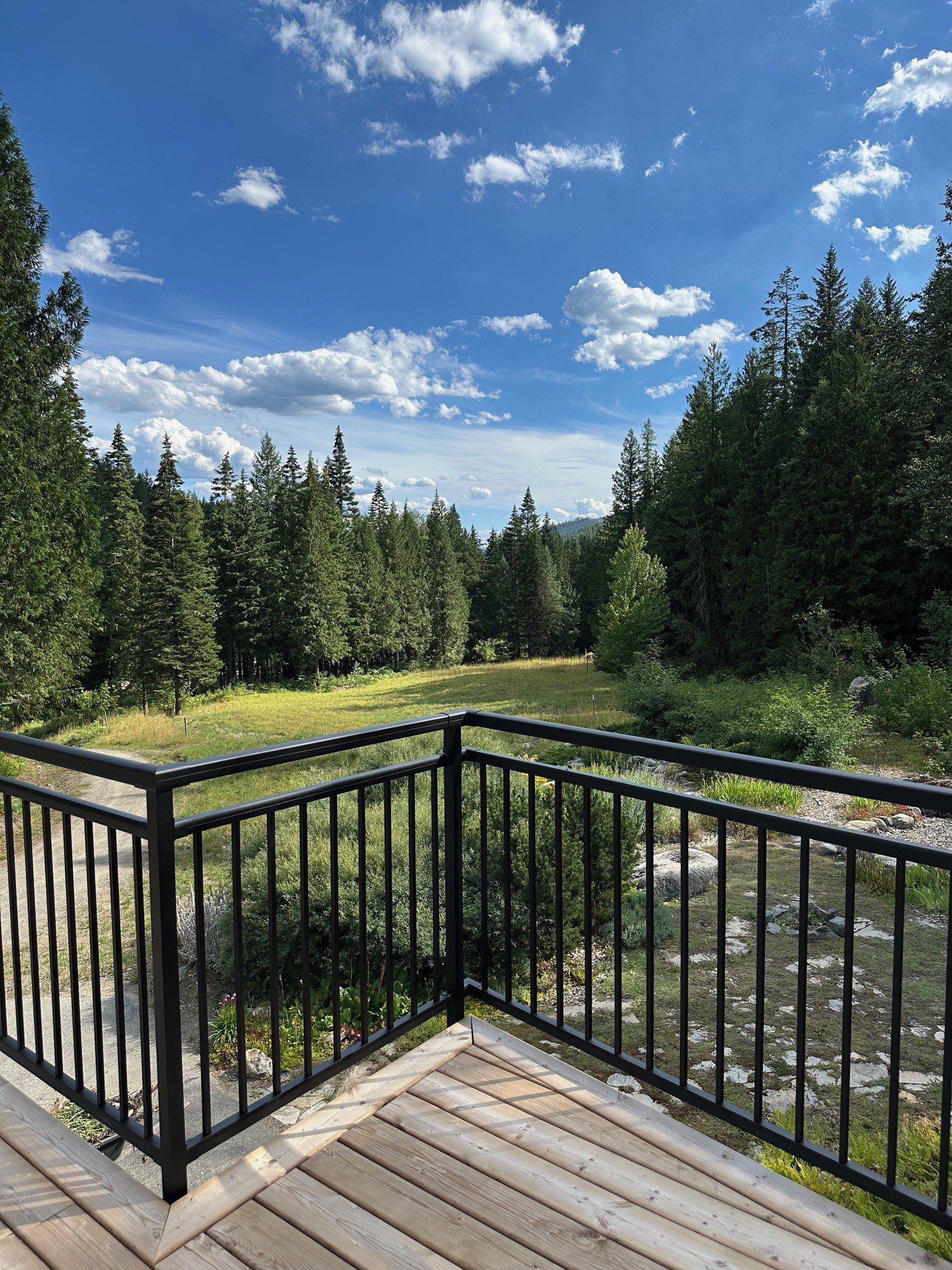
Every Innovative Aluminum railing system — Picket, Glass Component, and Infinity Topless — is available in 14 standard powder coated colors plus custom matching. All finished on our in-house AAMA 2604 coating line in Aldergrove, BC. Contact us or find a dealer to get started.
Frequently asked questions
What is the most popular color for aluminum deck railing?
Black. It’s not close. Black aluminum railing works with virtually every home exterior, every decking material, and every architectural style. Textured Black is a close second — same color, slightly matte surface that hides fingerprints and scuffs better. White comes in third.
Can you get aluminum railing in custom colors?
Yes. We offer 14 standard Innovative Series colors and can match virtually any custom color — specific RAL numbers, Pantone references, or “match this sample.” Custom colors go through the same 5-stage pretreatment and AAMA 2604 coating as standard colors. No difference in durability.
What deck railing style is best for a modern home?
Frameless glass, horizontal cable, or clean-profile aluminum picket in black or dark bronze. The common thread is clean lines, minimal ornament, and dark or neutral colors. Avoid colonial or ornamental profiles — they read as traditional, not modern.
Does aluminum railing come in different top rail profiles?
We offer four: square, round, flat, and colonial. Square and flat are the modern choices. Round is transitional. Colonial is traditional. The profile affects both the look and the feel — your hand sits on the top rail, so pick one that feels right, not just one that looks right in photos.
Can you mix railing styles on the same deck?
Yes, and it’s common. Glass on the view side, picket on the house side is the most popular combination. As long as the color, top rail, and post style match, the transition between infill types looks intentional and clean.